Location: Jaipur, RJ, India Site Area: 2.5 Ha Type: Academic, Master’s Dissertation Climate:
This dissertation addresses the prevalent issue of unsustainable urbanization in the 21st century, with a particular focus on Jaipur, India. By examining the spatial qualities of the vernacular city and the challenges faced by contemporary Jaipur, the study explores sustainable adaptive strategies aimed at enhancing outdoor thermal comfort based on Universal Thermal Climate Index (U.T.C.I) studies.
Through methodical analysis and testing, the research developed 12 robust urban design guidelines for new city areas, emphasizing the importance of desirable density and comfortable outdoor public spaces. Furthermore, a design demonstration illustrates the practical application of these findings, offering urban planners and designers actionable insights for creating more sustainable and livable urban environments. The conclusions drawn from this study provide valuable contributions to the field of urban design, advocating for a balanced approach that integrates environmental sustainability with urban development.
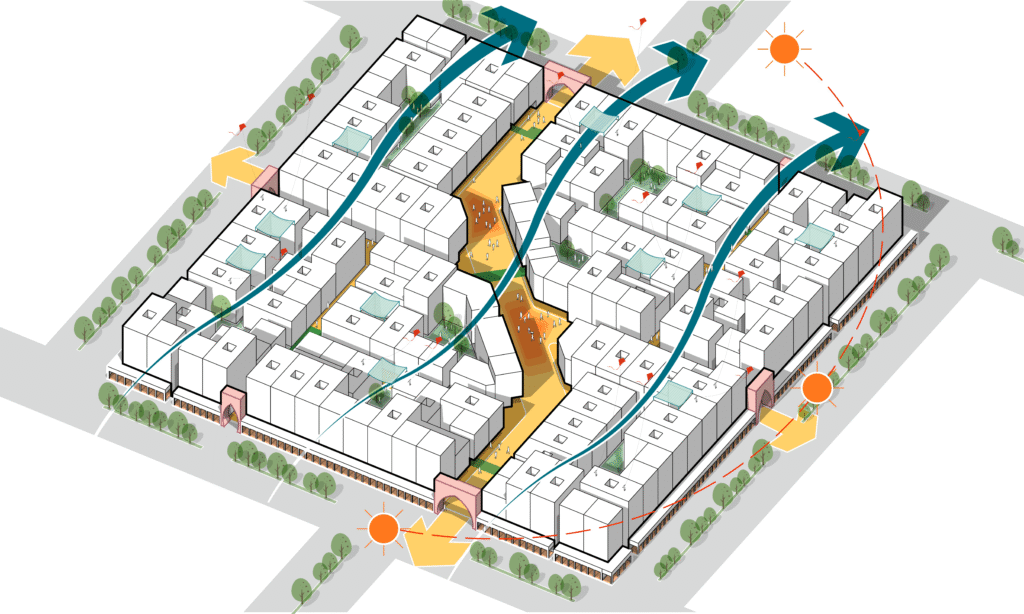
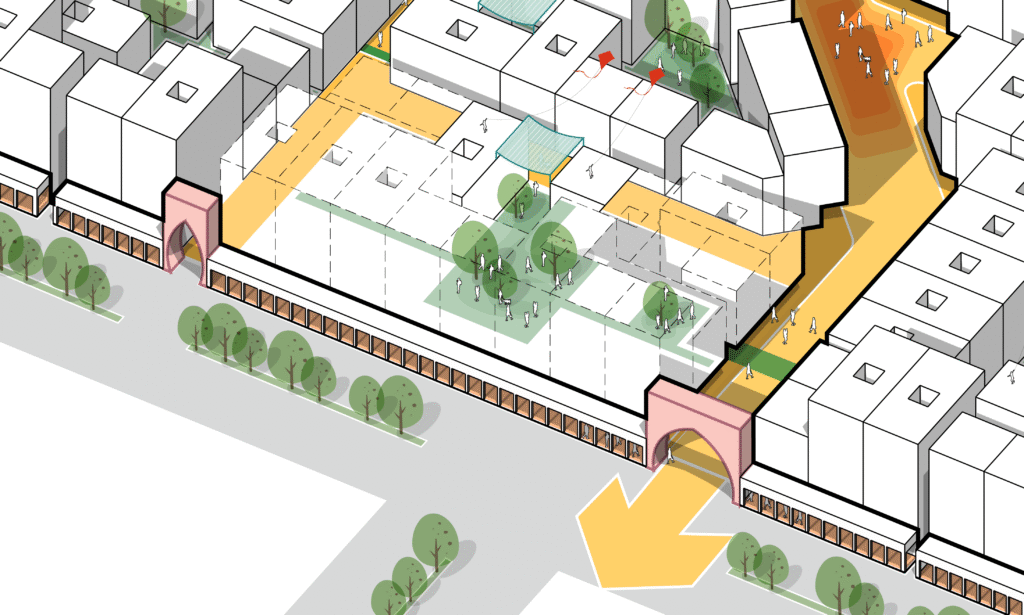
3D Design Demonstration
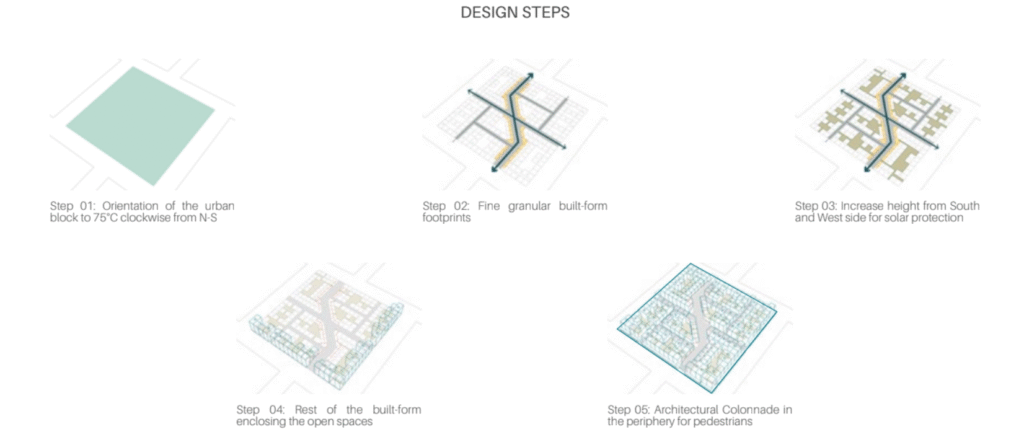
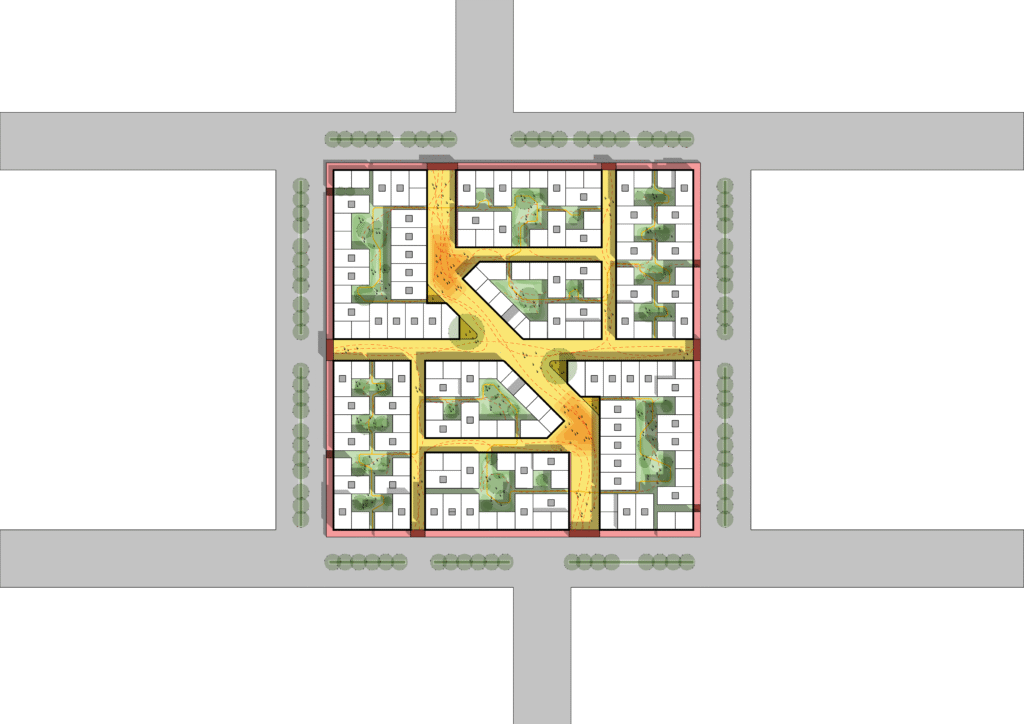
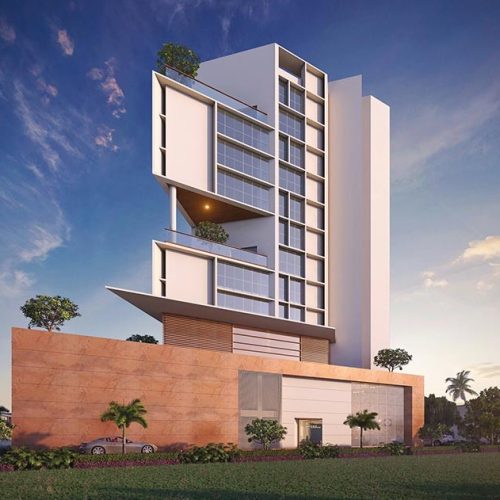
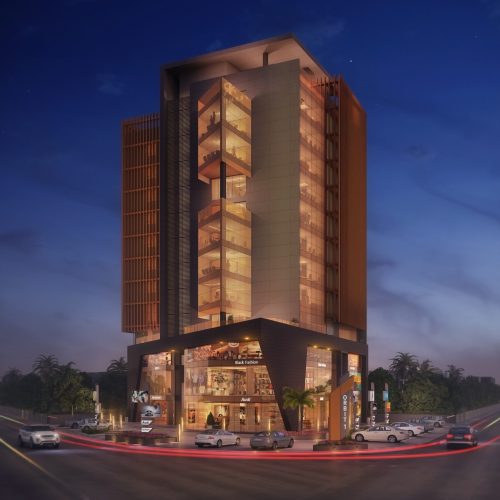
Proposed development of 150 M X 150 M Urban Block incorporating urban design guidelines derived from extensive research and simulation of the climate and context of Jaipur.
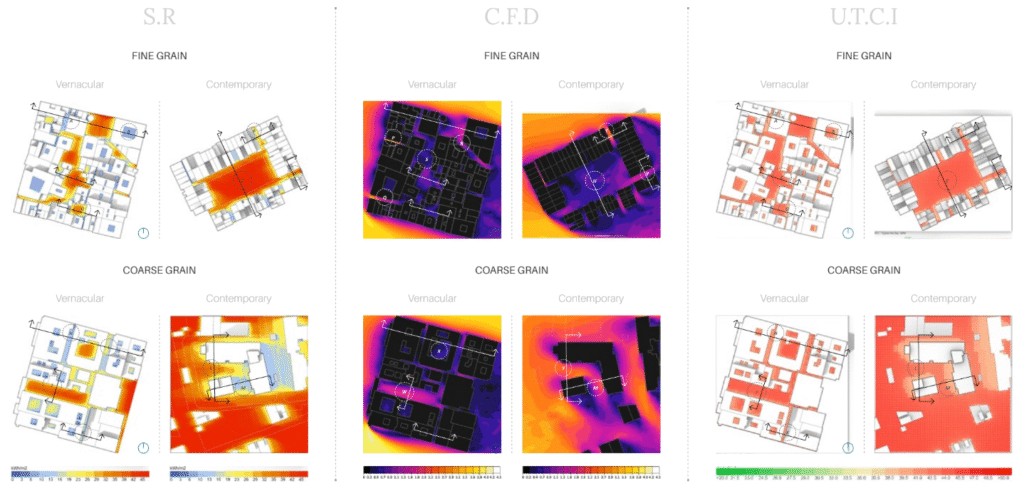
Simulation Studies
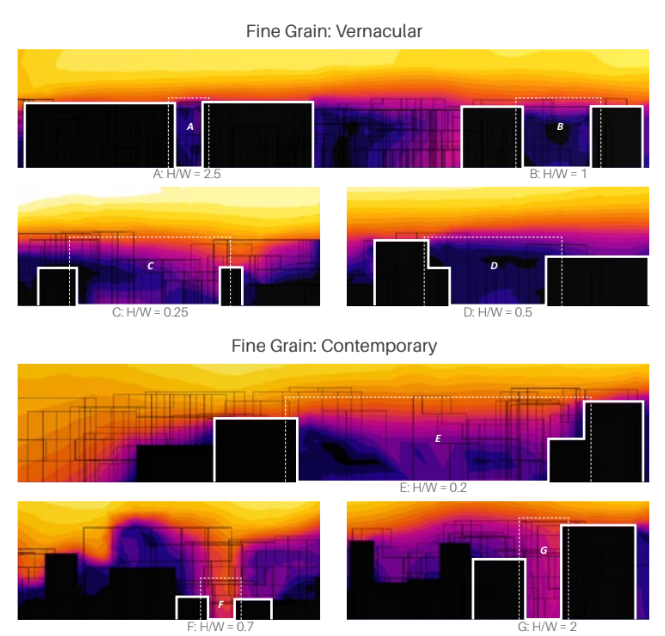
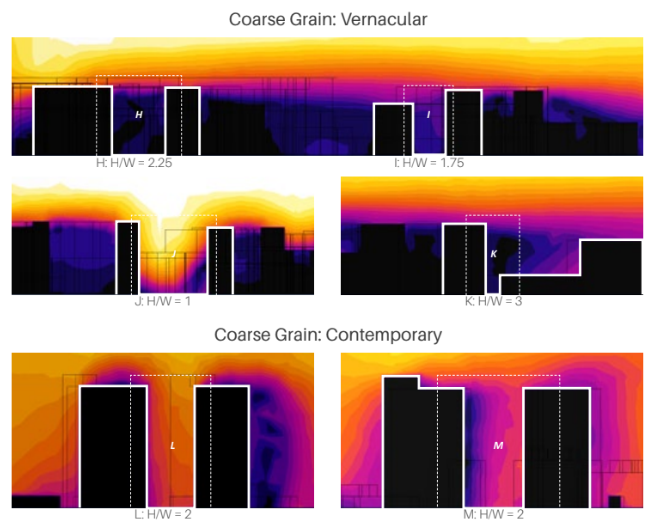
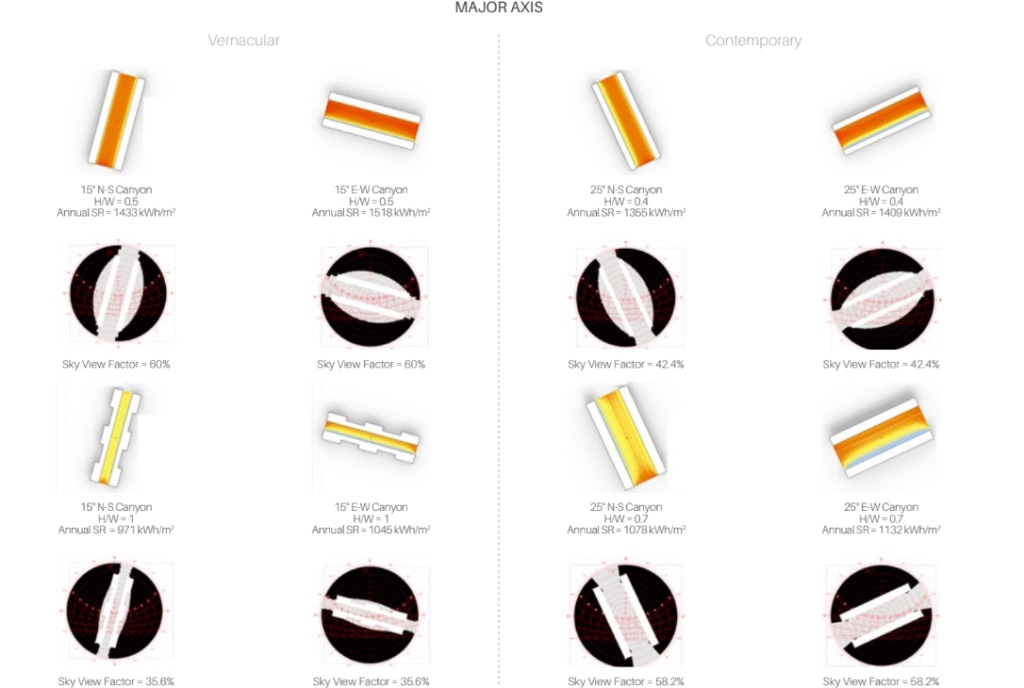
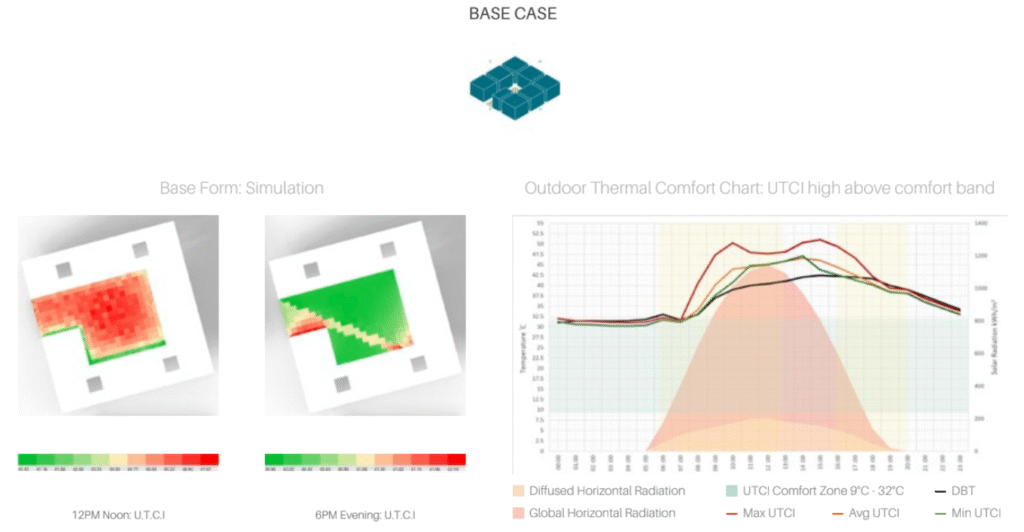
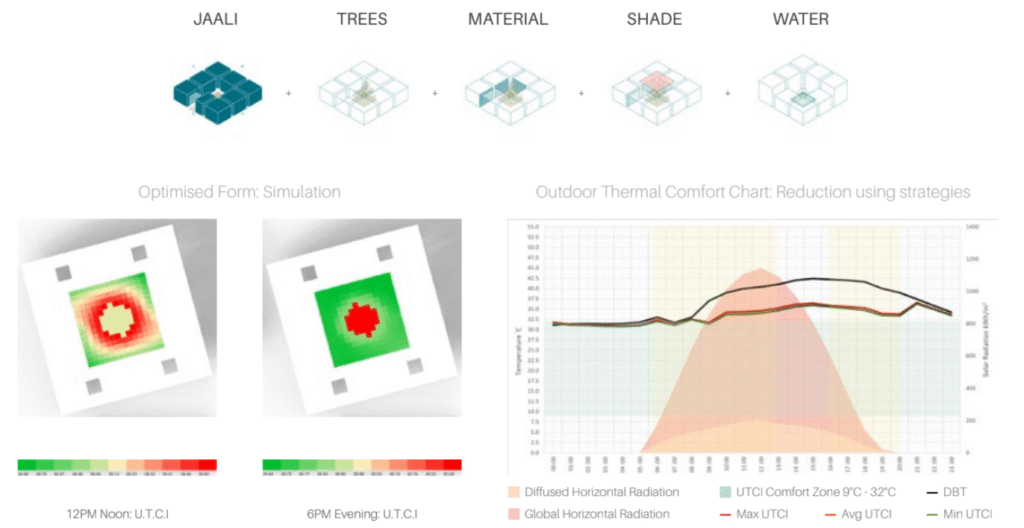
The analytical study seeks to understand the physical aspects that lead to the micro-climate of each space and derive relevant conclusions on urban morphology, aspect ratios, and orientations, to guide the development of the city of Jaipur. The performance of open spaces within different Urban Textures is analyzed through simulation of Solar Radiation (S.R), Computational Fluid Dynamics (C.F.D), and the Universal Thermal Climate Index (U.T.C.I).
Applicability: Design Strategies & Proposal
This section synthesizes findings from simulations studies and passive design studies and demonstrates these guidelines for the development of a climatically responsive urban extension in Jaipur. The proposal emphasizes creating comfortable and livable outdoor spaces that remain usable and inviting even during the city’s more extreme climatic conditions.
Conclusion
The design advocates for a balanced model of urban expansion that integrates environmental sustainability with urban development. By applying urban design guidelines informed by environmental simulation studies, the proposal demonstrates how climate-responsive planning can enhance the usability of outdoor spaces, thus contributing to greater public engagement and overall vitality of urban life.