Location: Thiruvananthapuram, Kerala, India Site Area: 250 sq.m. Type: Workshop Climate:
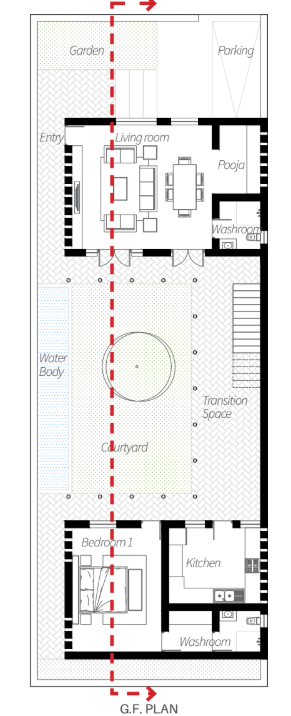
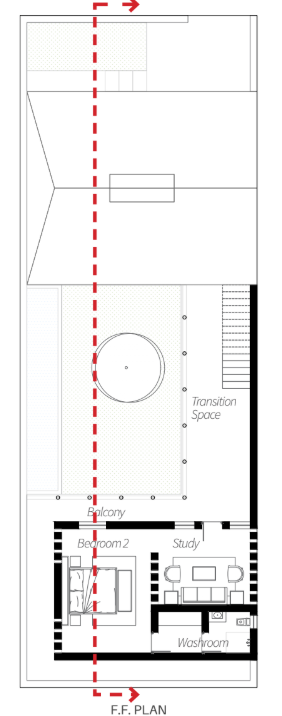
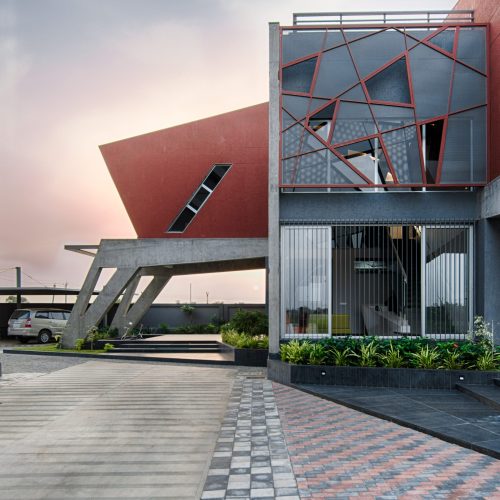
The objective of the project was to design with Bio-climatic principles to achieve psychological comfort with minimum energy consumption. To have a more data driven approach, Climate consultant software was utilized. Weather data of Thiruvananthapuram was decoded into useful charts and diagrams by the Climate consultant software. A small residential building was then designed based on the recommended design strategies taken out from the Psychometric Chart. The design tends to strike a balance between vernacular Kerala architecture and requirements of modern living. Apart from environmental sustainability, local materials and techniques have been incorporated to account for Socio-Economic sustainability as well.
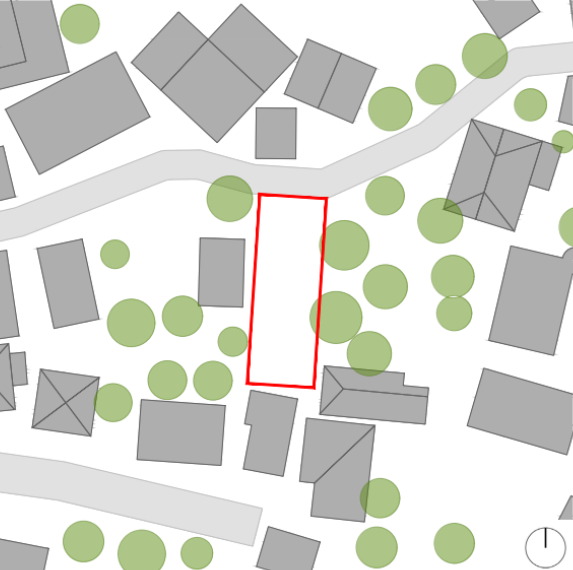
Site Location & Wind Direction
The site is an elongated plot located in a sparsely dense residential settlement. The predominant wind direction is S-W and W. The main goal is to capture these winds in the design.
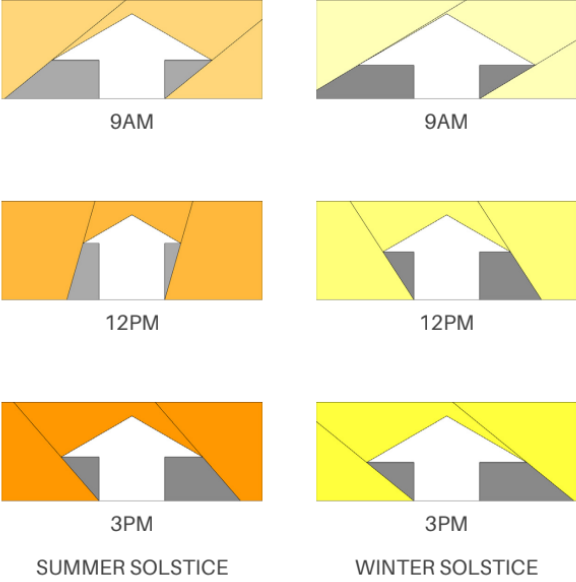
Sun Path & Shading Angle
Summer and Winter solstice altitude angles were figured out using sun path diagram and subsequent angle for shading device was determined.
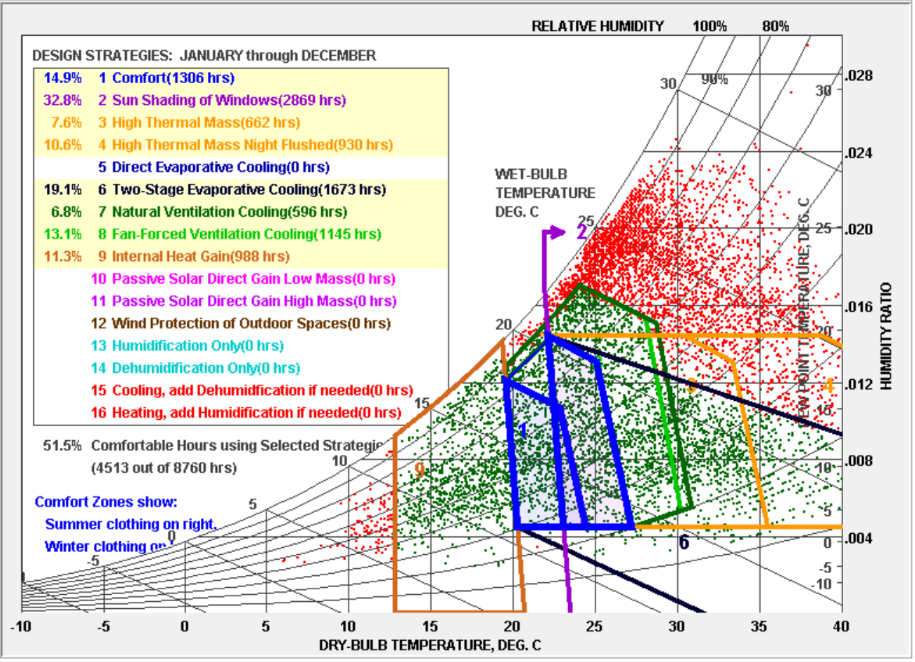
Psychometric Chart & Design Strategies
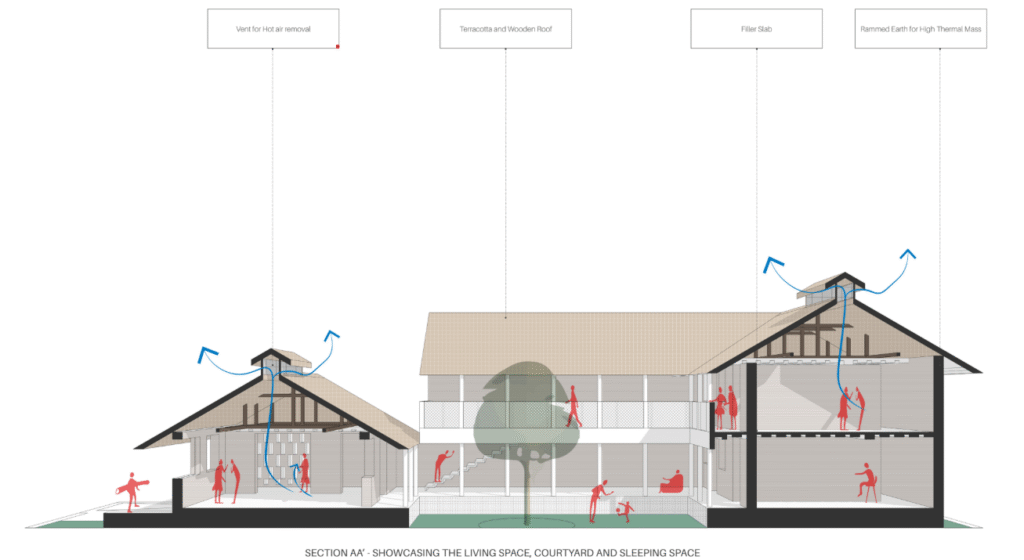
The psychometric chart assisted in determining passive design strategies to achieve comfort. Comfort Model ASHRAE handbook 2005 Model was the main parameter in developing a basic sense of comfort in this climatic zone in India. The Hot and humid climate of Kerala requires passive design strategies such as High Thermal Mass, Evaporative Cooling and Internal Heat Gain to reduce energy consumption. High Thermal mass was achieved via Rammed Earth construction, and evaporative cooling using water feature.