Re-imagining neighborhoods towards generating healthy urban environments through water sensitive urban design
Location: Raipur, Chattisgarh, India
Type: Academic, Master’sThesis
Semester/Year: 4th Sem, 2022
Area: 8.5 sq.km.
Collaboration: Individual
Contribution: All presented
Supervisor: Ar. Nishant Lall
Contaminated water systems caused by ecologically insensitive planning result in water, sanitation and hygiene (WASH) related diseases that lead to unhealthy urban life of communities in a city. Haphazard urbanization triggered by developmental pressures is causing environmental degradation and weakening the existing interdependencies between community and water systems. With insensitive planning and its repercussions on public health and water systems intensifying, water sensitive ways of urban development are becoming more and more indispensable.
The thesis proposes a Water-Sensitive urban design approach to urban development that enhances the relationship between the community and water and addresses other health determinants of urban form. It does so by guiding development around these urban water systems by restricting developments on sensitive land, creating sustainable guidelines, and suggesting land suitability and re-densification strategies for future growth. Thus improving the biological, ecological and economic health for long term sustainable growth.
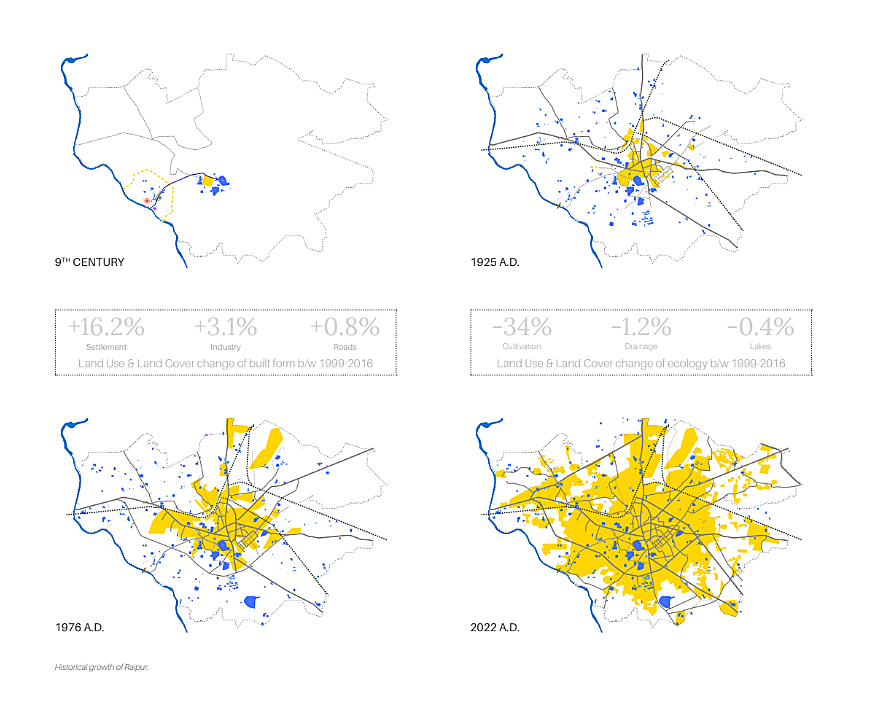
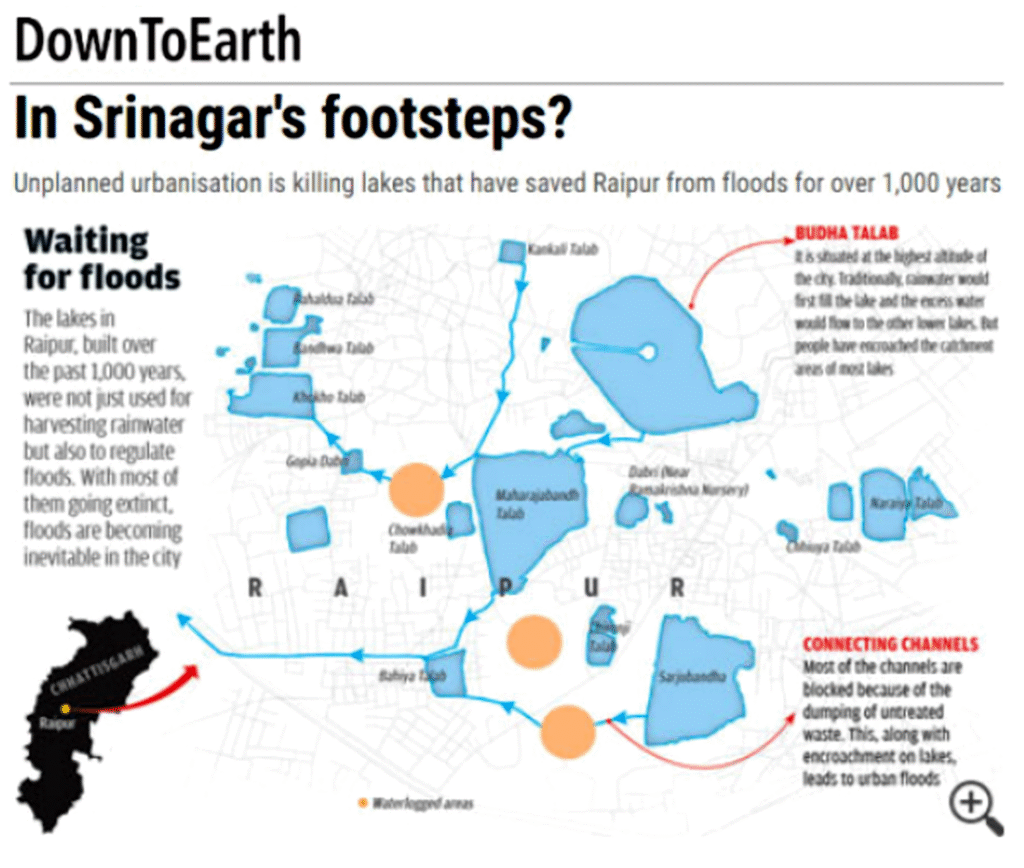
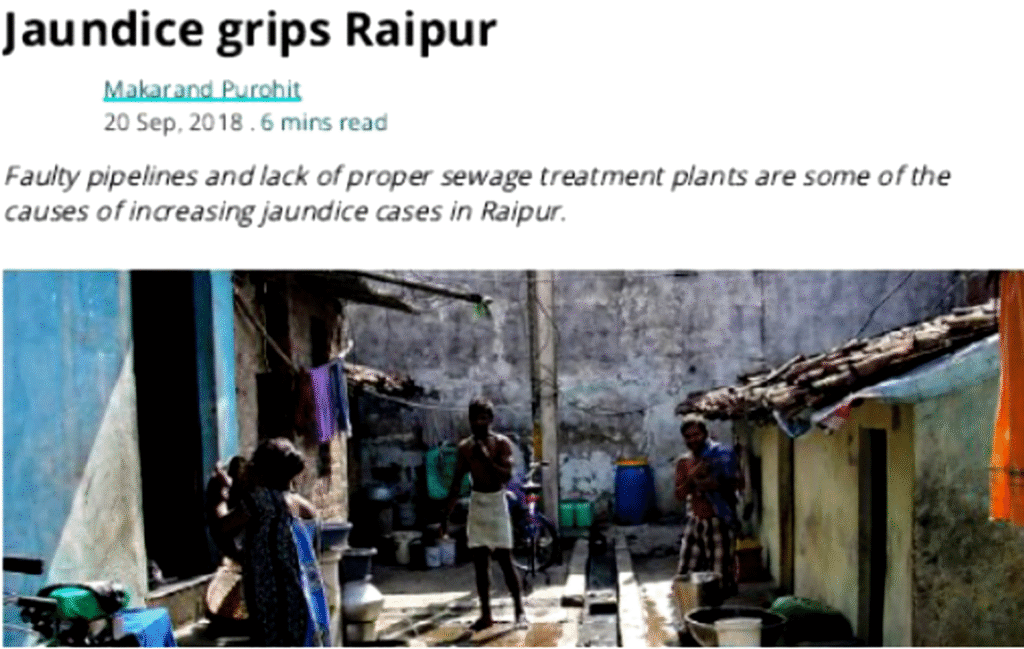
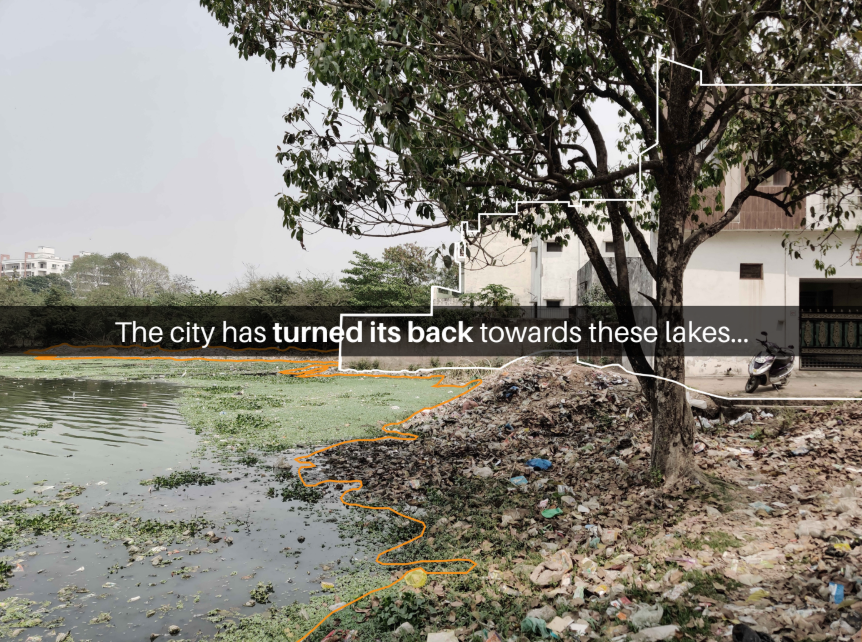
The Primary Urban Concern: Deteriorating Ecology & Health The city of Raipur, at its peak, once had 200 man-made lakes, and the people understood their importance as a way to conserve water. Today only 55 lakes remain, many of which are nearing extinction. Official data shows the city has lost more than 100 lakes in the past 25 years or four lakes yearly. Water bodies that were once used to conserve water are now used to dump untreated sewage, thus contaminating the source of drinking water for many. The reason: unplanned and rapid urbanization, clubbed with government apathy. The undulating landscape of the city, which supported these lakes at one point in time, has been encroached upon by buildings, leaving no space for water to move. The encroachment on lakes leads to floods during the monsoon. As a result, the residents suffer from health issues caused by waterborne diseases such as jaundice and diarrhea. Lack of proper WASH conditions leads to further aggravation of the problem. Since these concerns in the city align with the thesis inquiry, Raipur has been selected as it provides an opportunity to demonstrate water-sensitive ways of urban development.
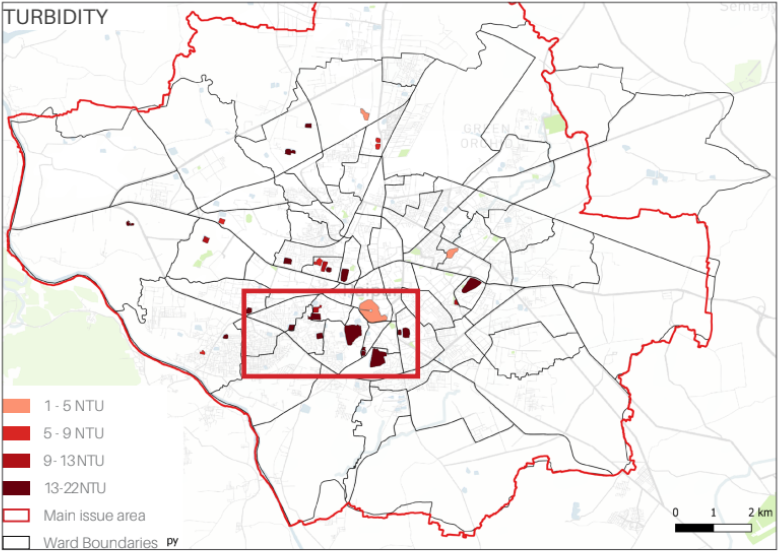
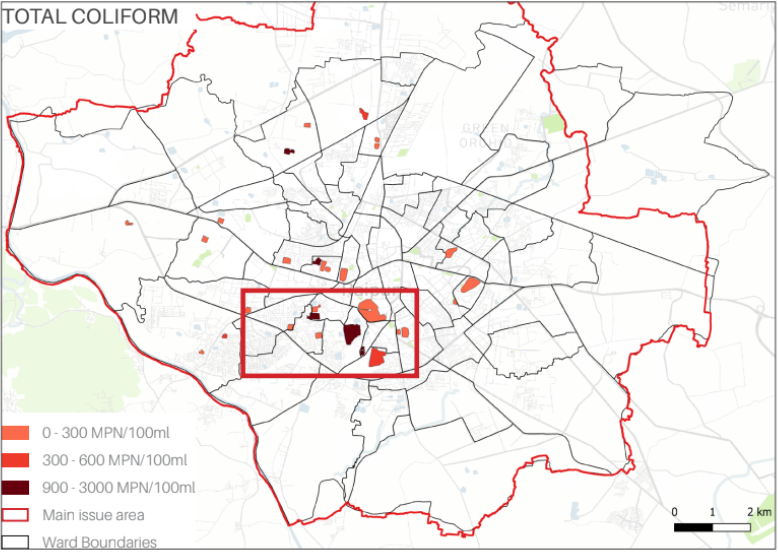
City Level Analysis: Water Indicators Parameters such as Turbidity, Biochemical Oxygen Demand, Fecal Coliform and Contaminated groundwater are understood, and their values taken from research papers have been mapped. The map assists in deciding crucial problematic zone that would need to be addressed in the following urban design stage.
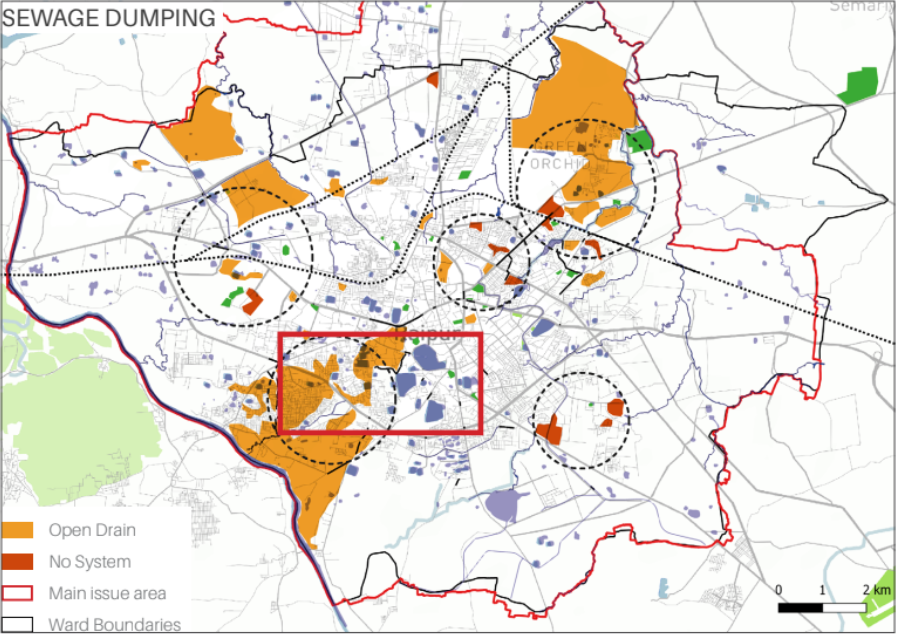
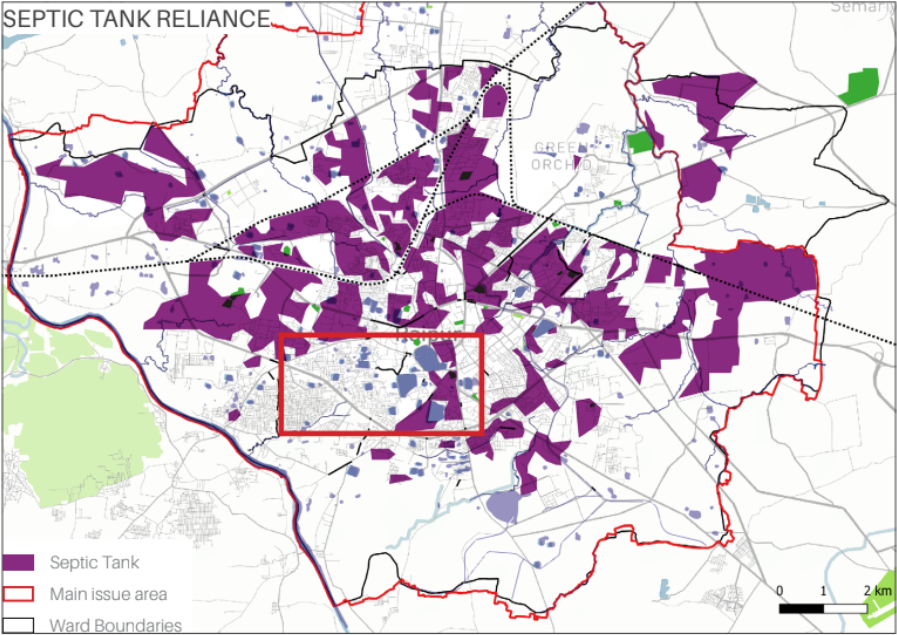
City Level Analysis: Hygiene Indicators Hygiene is one of the most critical factors that determine good health. A clean living environment will not allow harmful germs or pathogens to foster, thus reducing the risk of becoming sick. To understand the city’s cleanliness and sanitation status, systems such as open defecation, sewage dumping, septic tank reliance etc were looked into.
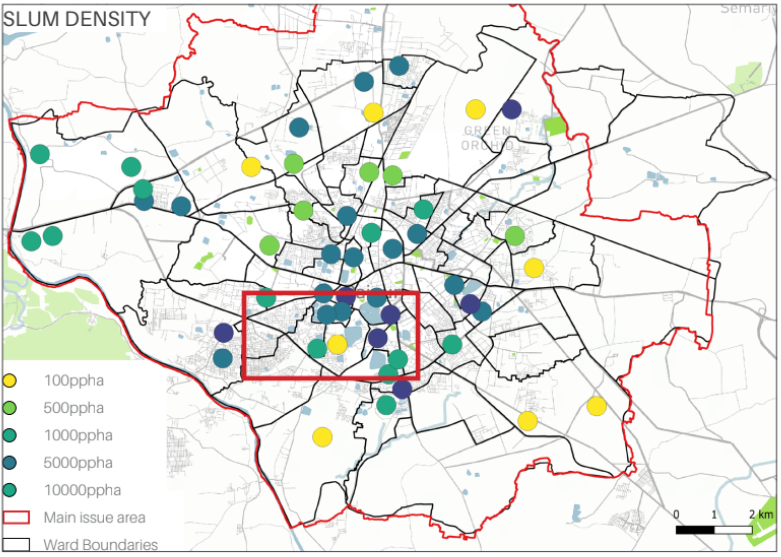
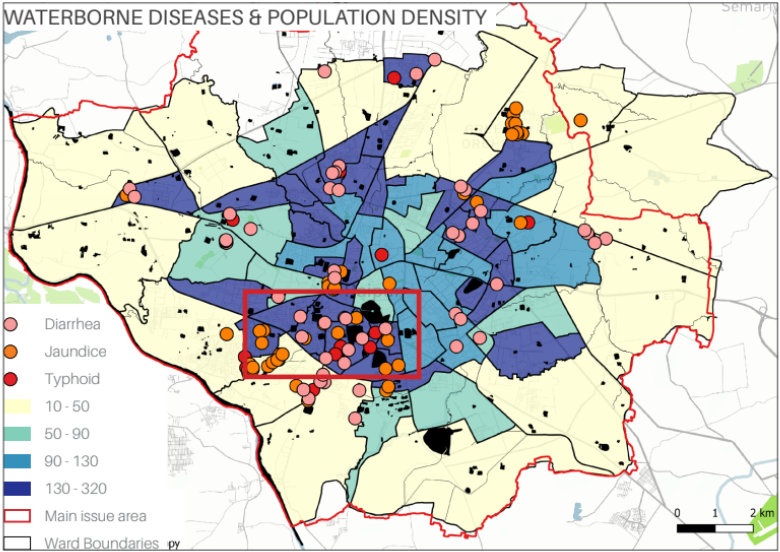
City Level Analysis: Health Indicators These are the direct occurrence of diseases, especially water-borne diseases, in the city. They provide an overview of the troubled areas and the number of people affected. Parameters of diseases, slum population, density, and their overlaps have been studied.
Zone Level Analysis: Ecological Systems
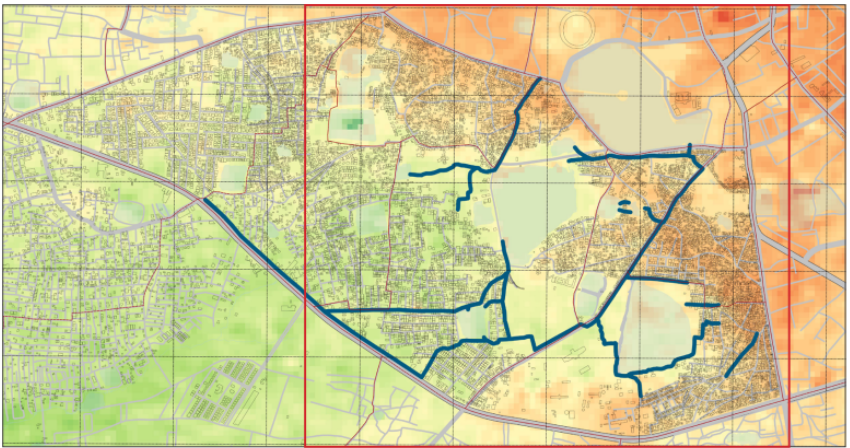
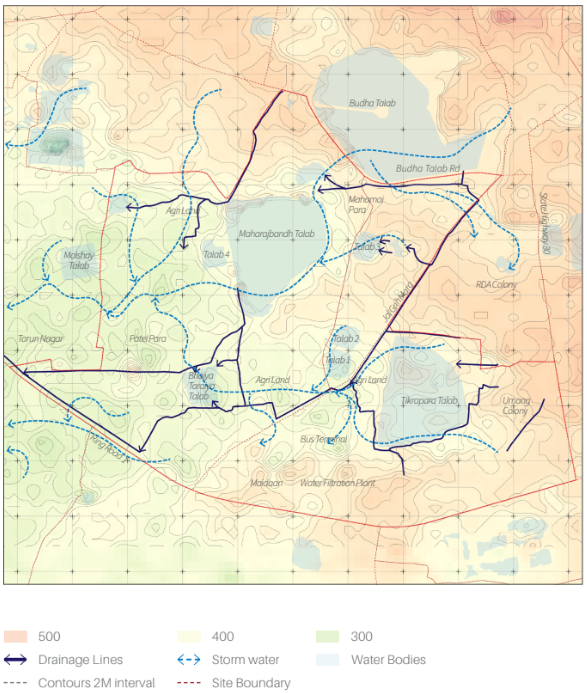
The zone gently slopes from Budha Talaab in the NE to the SW directing the water flow from these lakes toward the Kharun River. These lake systems played an important role in people’s conservation and everyday association with water. Their neglect and contamination have led to increased health and sanitation issues in the area.
Zone Level Analysis: Deviation From M.P.
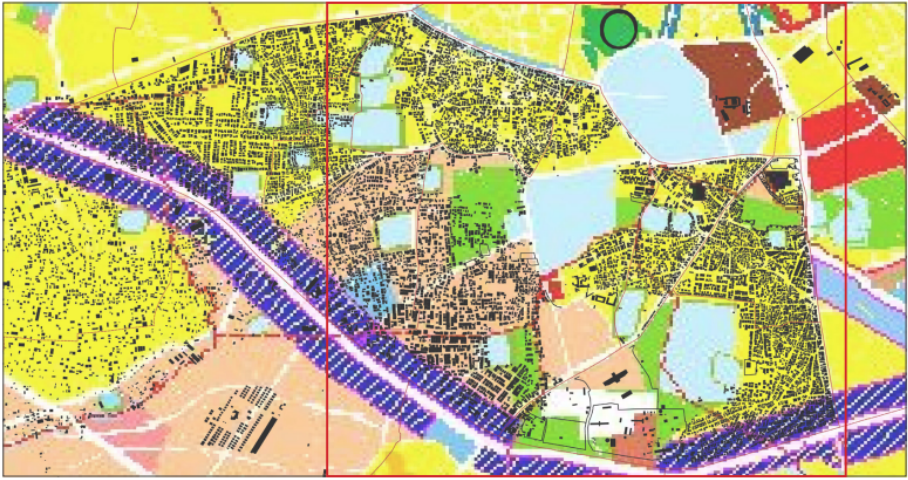
By overlaying the present scenario on the Master Plan, it was observed how the current growth has crept into the designated green spaces for ecology. This encroachment has reduced access to many green and blue open spaces. The construction of the inter-city Bus terminal is resulting in more changes in the internal areas than anticipated.
Zone Level Analysis: Income Groups
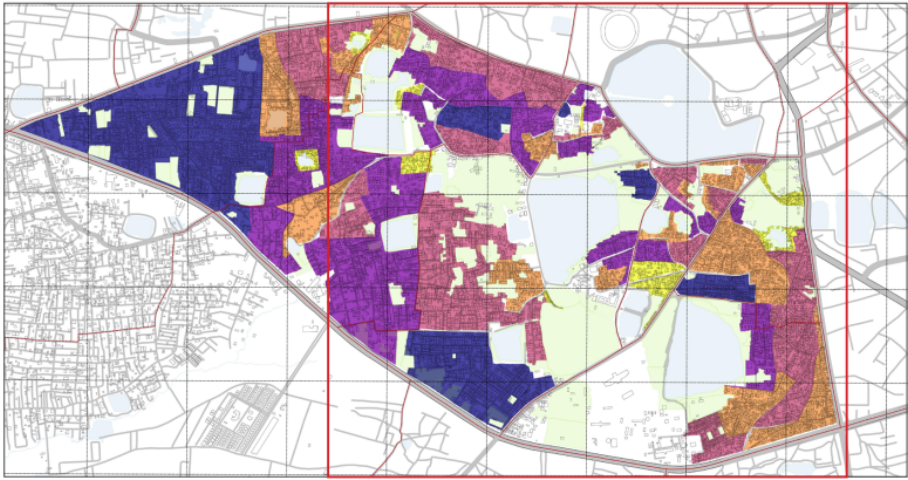
The H.I.G residing in the relatively planned Western part of the zone enjoy an amount of open space. However, the same is not true for the E.WS and L.I.G residing in the Eastern part of the zone. Though there are many green-blue systems surrounding their habitation zones, the access to those systems as spaces is fairly limited.
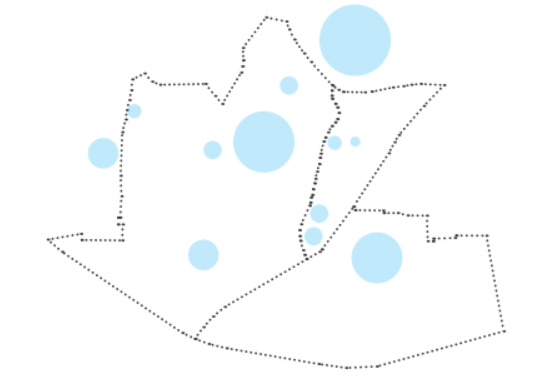
WHY THIS SITE? • The site is a combination of 3 wards: 62, 64 and 65. • It posses the cities oldest constellation of lake systems. • Consists of a mix of EWS-LIG-MIG settlements. • The site is undergoing rapid transformation due to new developments. • As a result the old lake system is deteriorating. • Saw high cases of water-borne diseases. • Need to re-establish everyday association of people with water.
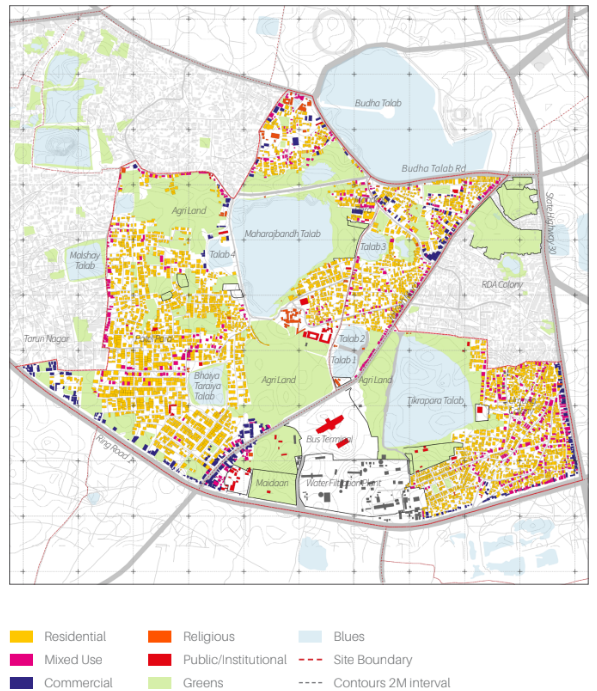
SITE LEVEL ANALYSIS: FUNCTIONAL DISPOSITION, SETTLEMENT TYPE Functional disposition: • Major portion of the site is residential in character. • In denser settlements, many mixed used and commercial buildings dominate. Settlement Type: • Site is dominated by organic and unplanned single-plot development. • Organic settlements are housed by EWS and LIG communities • Occupations such as farming, hawking, drivers, house maids etc. • MIG service class resides in upcoming single plot developments.
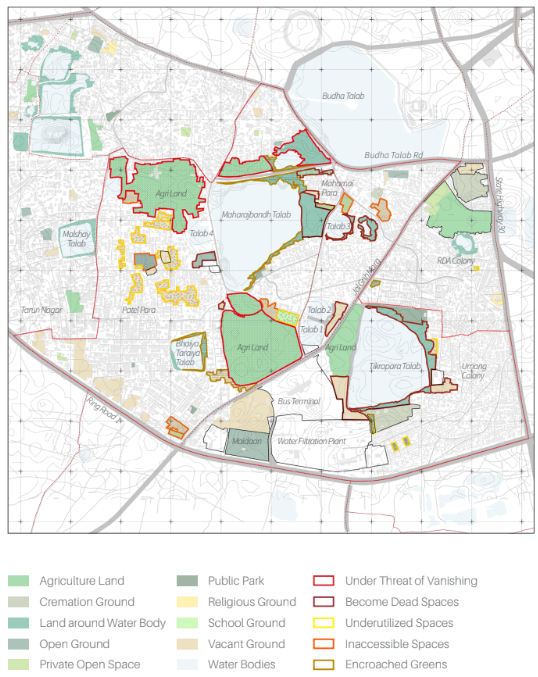
SITE LEVEL ANALYSIS: GREEN HEALTH Green ecological health on site is under threat of: • Being vanished due to developmental pressures, particularly fertile farmlands. • Becoming dead spaces due to their size and positioning within the urban fabric. • Being underutilized as they have yet to be assigned any proper function. • Being inaccessible due to the construction of high boundary walls causing segregation.
• Becoming encroached due to poor supervision and disregard of bye-laws.
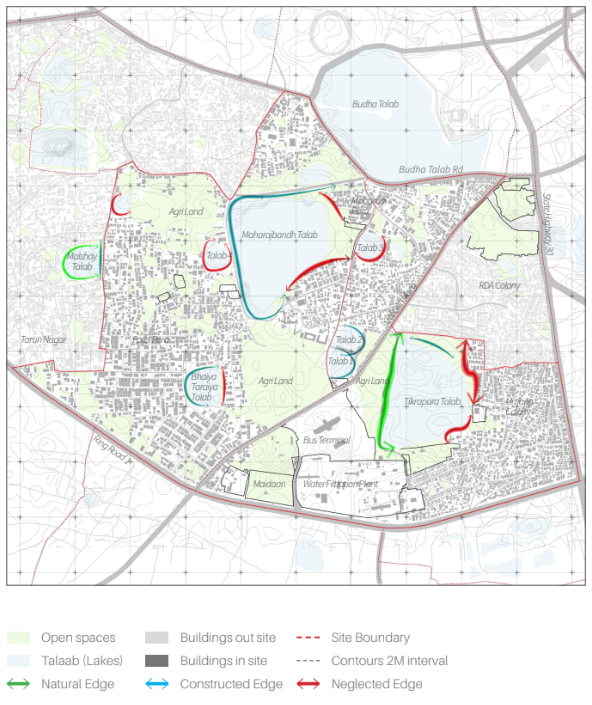
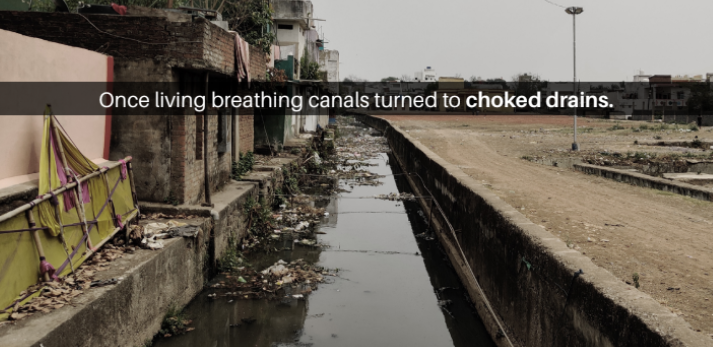
SITE LEVEL ANALYSIS: BLUE HEALTH Blue ecological health is in shambles because: • The old water system of connected lakes through stormwater channels is broken. • There is an overreliance on open drainage pipelines which do not allow for any social interface between community and running water systems. • Due to haphazard development, built-form has begun engulfing the lake’s catchment area, thus preventing its natural expansion. • Many lakes have become contaminated as a result of receiving waste water drainage, aggravating the issues of health.
SITE LEVEL ANALYSIS: EDGE CONDITIONS There are three ways in which the built form interacts with these lakes and form • Natural edges, • Constructed edges, • Abrupt or neglected edges.
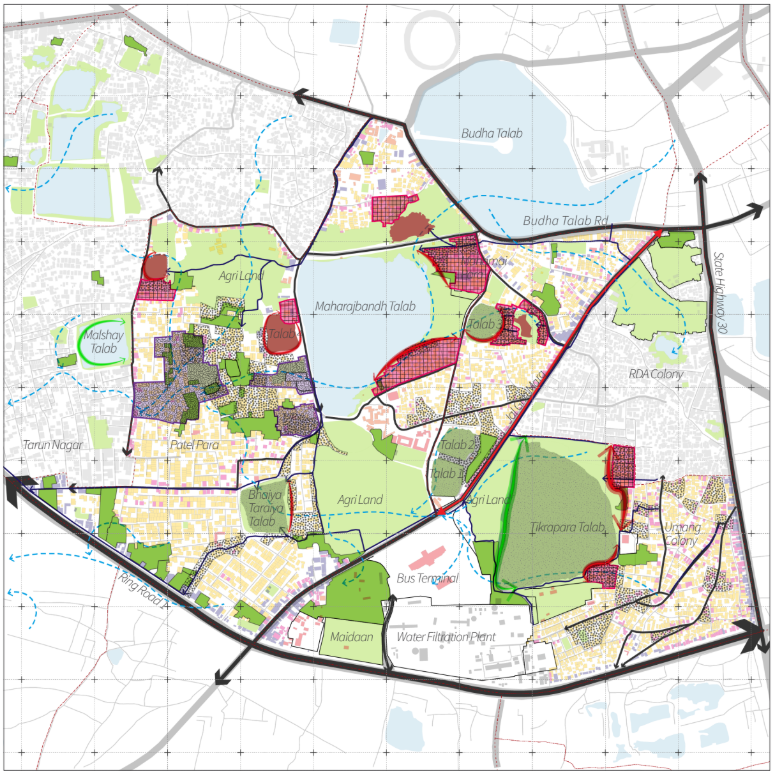
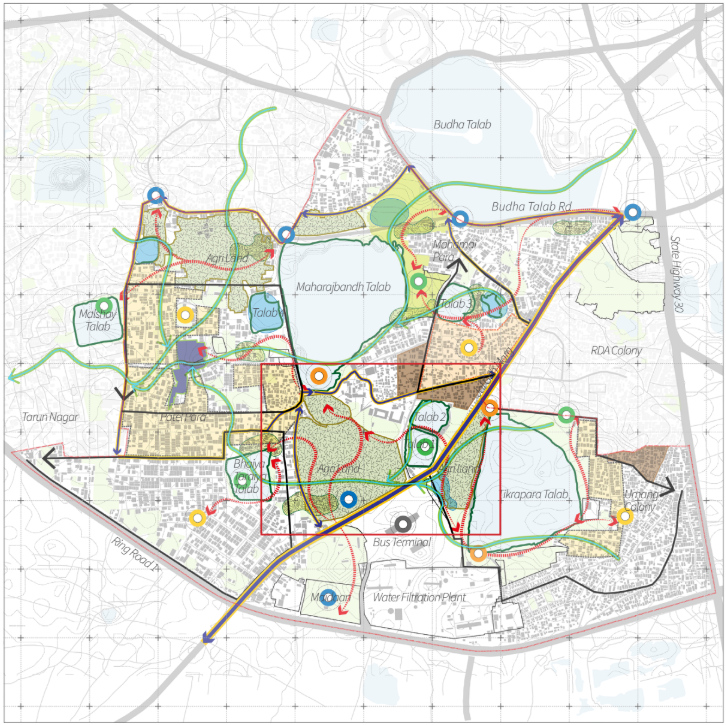
Existing Stucture Plan & Issue
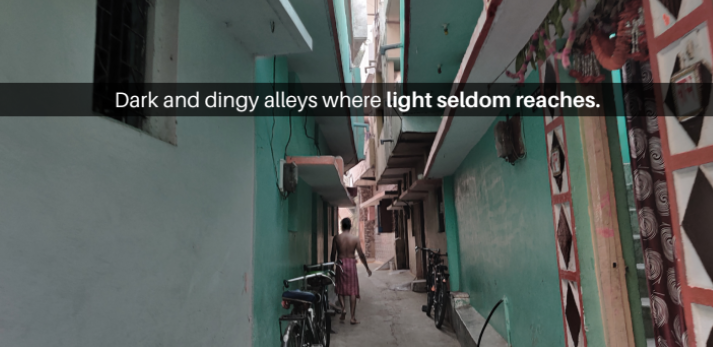
MORPHOLOGICAL ISSUESAFFECTING HEALTH • Poor permeability towards natural systems creating. • Limited light penetration. • Weak edge character along drainage lines. • Horizontal expansion reducing open spaces. • Poor last mile connectivity.
ECOLOGICAL ISSUES AFFECTING HEALTH • Uncontrolled growth in catchment areas. • Reduction in amount of permeable ground cover. • No connection to the centralized system of sewer management. • Lack accessible open spaces.
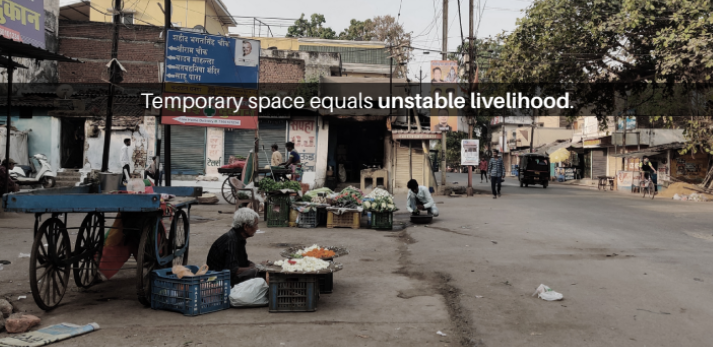
ECONOMICAL ISSUES AFFECTING HEALTH • Decreasing agricultural land due to development pressures resulting in loss of farming economy. • Lack of community purpose markets. • Lack of sufficient public healthcare & toilet facilities.
Proposed Structure Plan & Vision
‘Biological – ecological – economic regeneration of city core by re-establishing positive relationships between the community and water systems that lead to healthy and clean development.’
INTEGRATE
Biological Health
MORPHOLOGICAL STRATEGIES
Gentle density, permeable edges
MOBILITY STRATEGIES
Walkable routes, bicycle routes, NMT routes
REVITALIZE
Ecological Health
ECOLOGICAL STRATEGIES
Green buffer, riparian edges, urban forestry
GREEN INFRA STRATEGIES
Bio-swales, oxidation & retention ponds
GENERATE
Economical Health
SOCIAL & LIVELIHOOD STRATEGIES
Clinics, public toilets, farmers market
1.14 OBJECTIVES • Augment the Green and Blue systems • Enhance livability by providing healthy living environments • Strengthen interdependencies between communities and water systems. • Ensure healthy and equitable development.
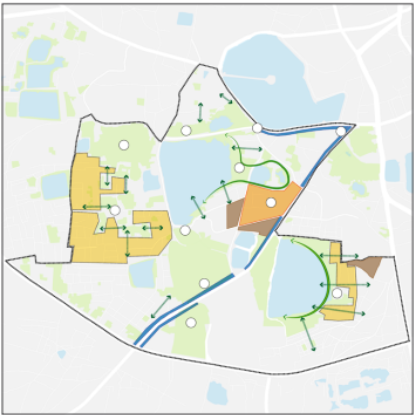
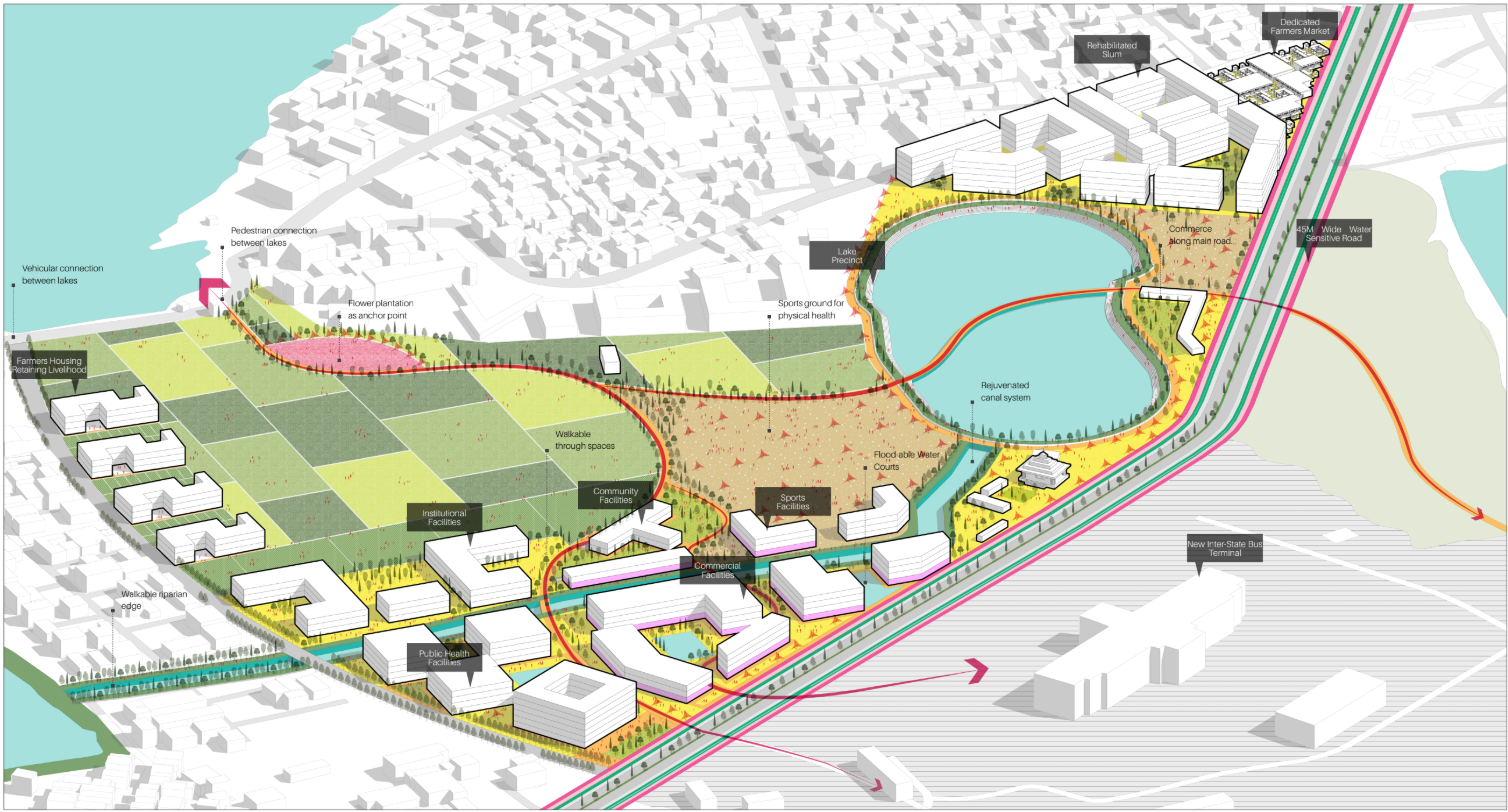
FARMER’S HOUSING & AGRICULTURAL ZONE Space for farmer’s housing based on a sites and services approach. Preserving their livelihood by retaining their agricultural activities.
INSTITUTIONAL & COMMERCIAL ZONE This part contains most number of diverse activities, ranging from hospitals, commercial establishments and public buildings such as library. Being opposite to the new bus terminal allows it to be accessible by people from in & around city.
TEMPLE & LAKE & MAIDAAN PRECINCT A proper space to strengthen the relationship between lake and people by providing public space for social interaction and cultural activities. Provision of sports facilities which is accessible to all income groups.
REHABILITATED SLUM & VEGETABLE MARKET Providing housing facilities for the urban poor with access to the lake precinct to retain their interdependency with the lake. A dedicated farmers market catering to people residing nearby and far away. Produce from farm lands can be sold here.
3D Design Demonstration
The master plan attempts to prevent the encroachment of the “Grey’s”, i.e. Built form into the “Greens”, i.e. the farmlands, by adding a layer of the “Blues”, i.e. the canal water system. The land in front of the Bus terminal is primarily utilised for public use by providing public functions such as youth centres, eateries, temple courts, shops, hospitals and daycare centres.
Section Through Design Area : Water Sensitive Urban Design Approach
The section showcases water sensitive urban design approach to developing the area. The design respects and enhances the natural hydrological systems by preserving water bodies and streams. A more healthy, clean and sustainable development can be achieved through the thoughtful integration of nature into the everyday life of citizens.
Conclusion
The design ideation tries to achieve: A physical environment that allows people to move freely by harnessing the positive assets of natural water systems, thus contributing to the production of healthy urban life by creating communities and a sense of belongingness.