Location: Kolkata, West Bengal, India Site Area: 80 sq.km. Type: : Academic Climate:
Kolkata is a melting pot of diverse communities from various ethnic and geographic origins. Additionally, the annual floating population of domestic and foreign visitors makes this place a receptacle of cultural and social diversity. Be it the indigenous populations of this region, migrants from various parts of the country and tourists that come, the city spaces of Kolkata are subject to multiple claims and occupancies.
The study was conducted on two levels. The first level included understanding the city through the lens of secondary data, urban missions and the theme of Who’s City. The second level had all the same aspects, but it was conducted at a peripheral wedge level. The study unraveled the spectrum of socio-cultural content in this city and their respective association with spaces they occupy and use. The study also explored the spatial manifestation of such content as visible or proposed for this place by looking at social formations and corresponding cultural attributes. Later an area for design ideation was selected utilizing the learnings gained from the study.
City Level: Preliminary Study
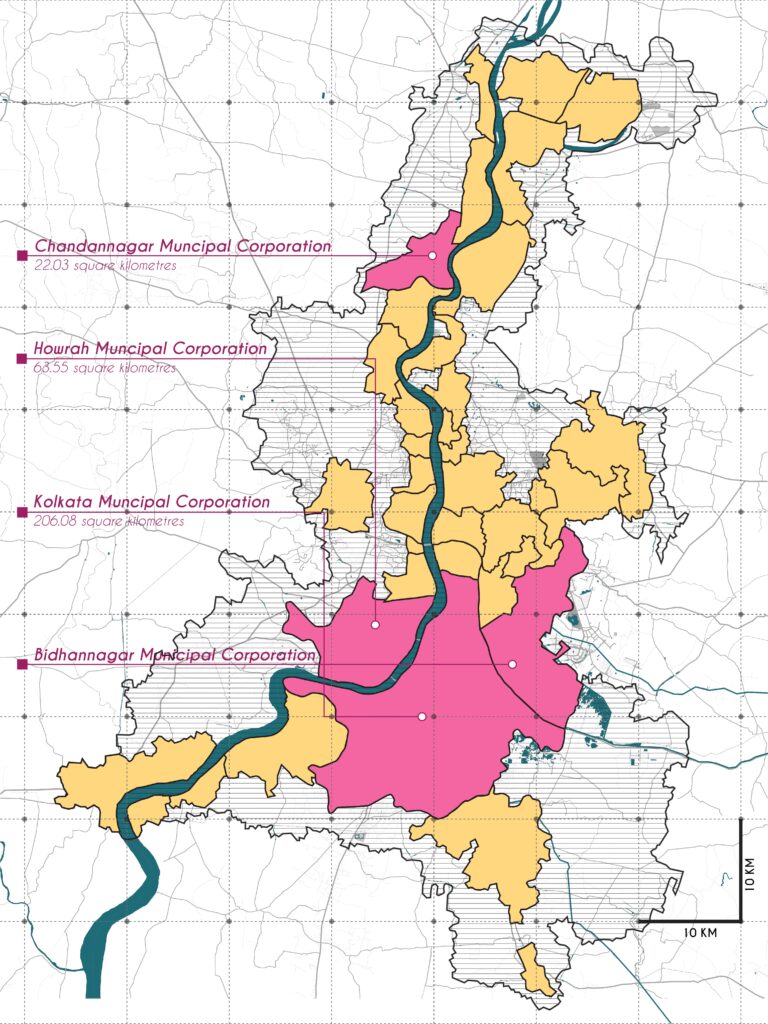
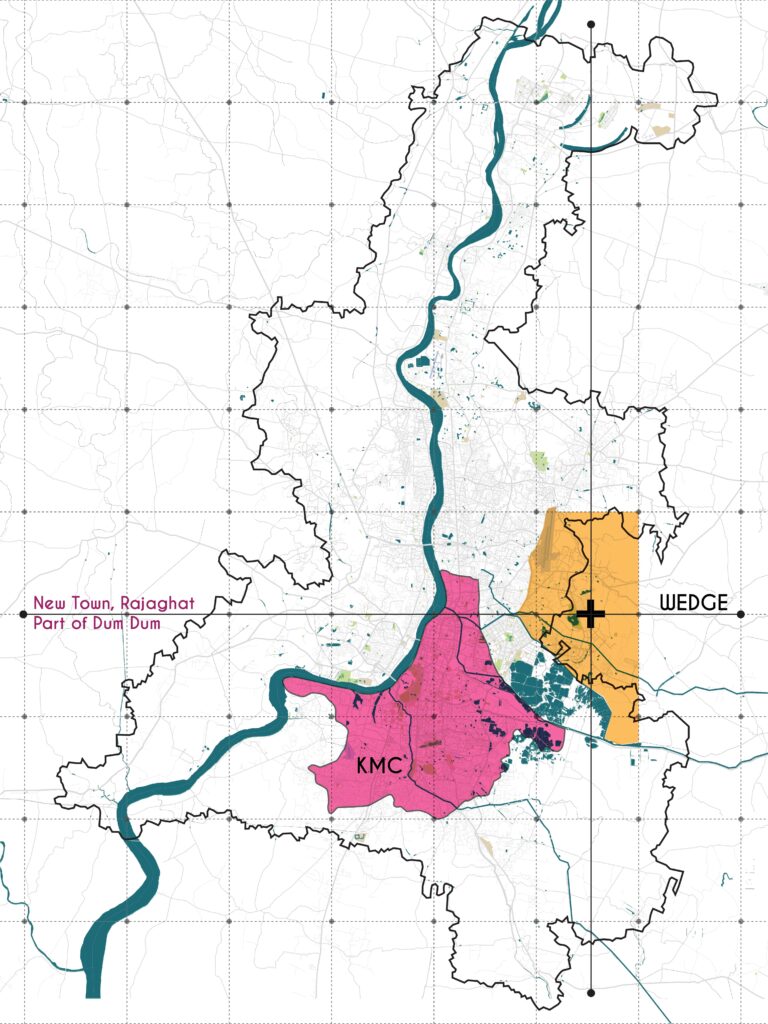
Administration Boundaries Of Kolkata
The present expanse of the city has a complex agglomeration managed by complex governing systems. KMC is an important conurbation of eastern India, and KMDA is the planning authority of the KMA Region. It is a coordinating organization which collaborates on projects which extend over municipal boundaries.
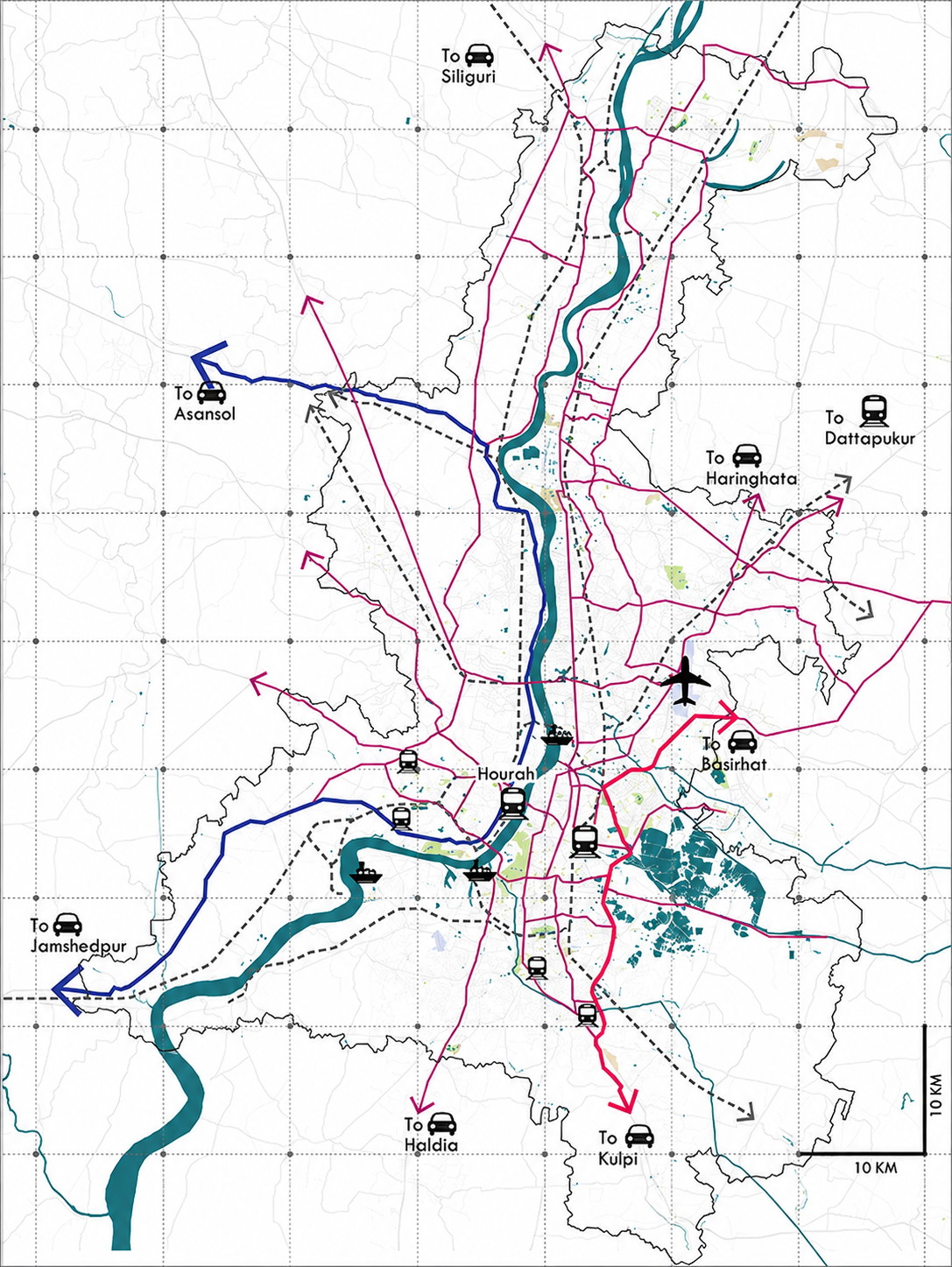
Connectivity Of Kolkata
Kolkata offers its residents and visitors alike, a multitude of options to arrive and move through its complex urban fabric. Examples are: an age-old Rail Network, a winding Road Network, a sturdy Water Network of Ferries, and lastly a Tram Network and the famous Yellow Taxis of the city.
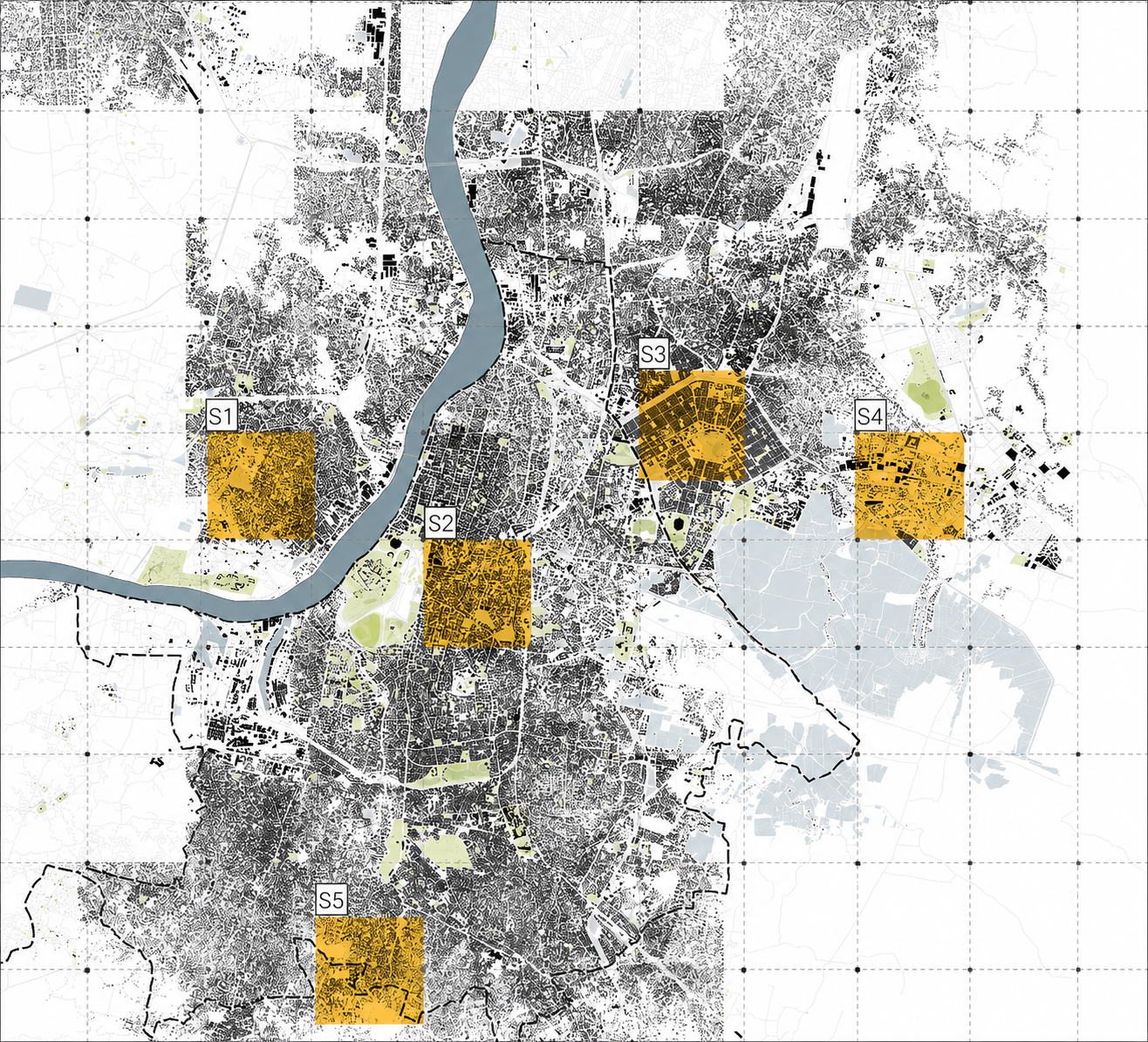
Morphology Of Kolkata
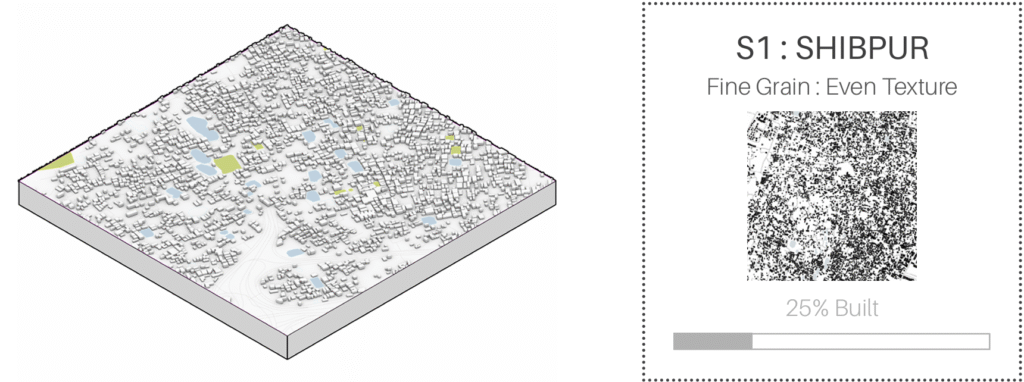
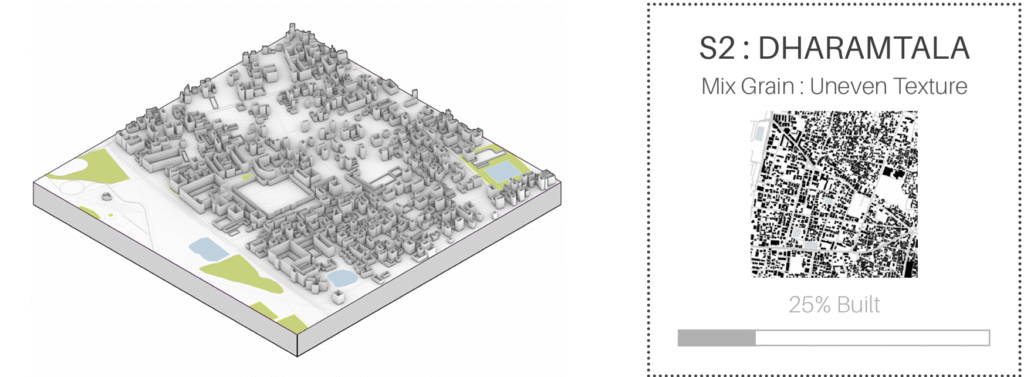
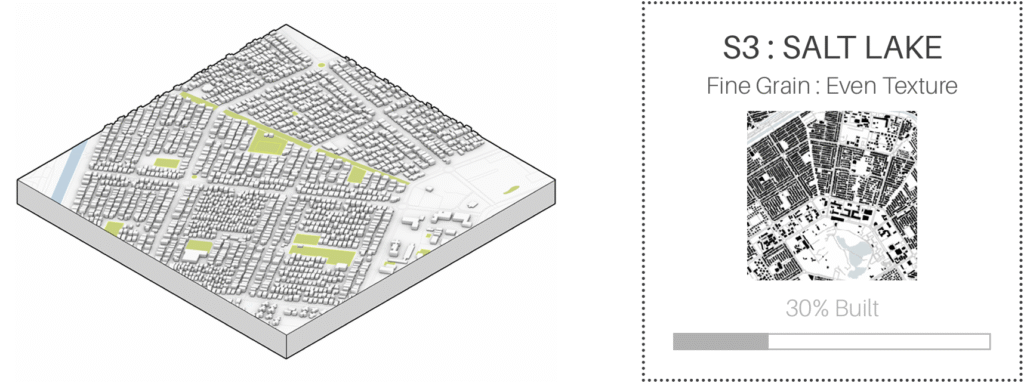
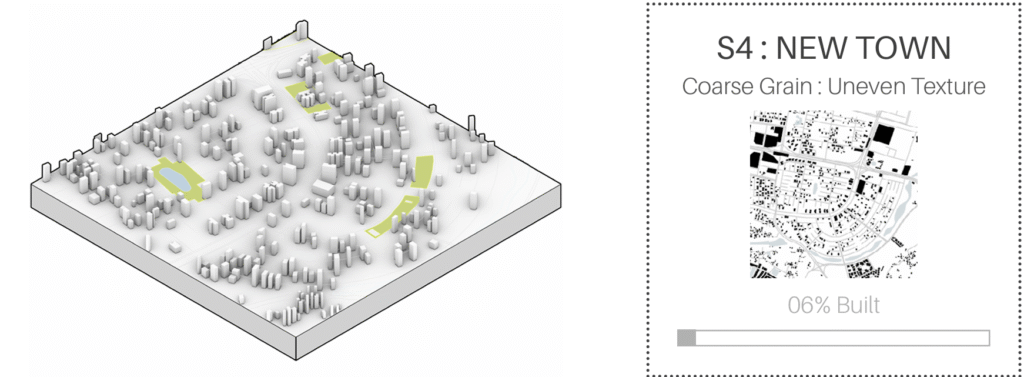
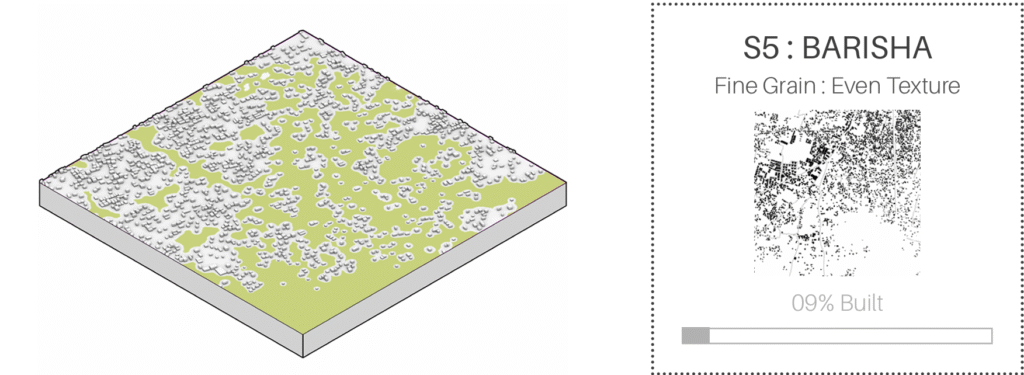
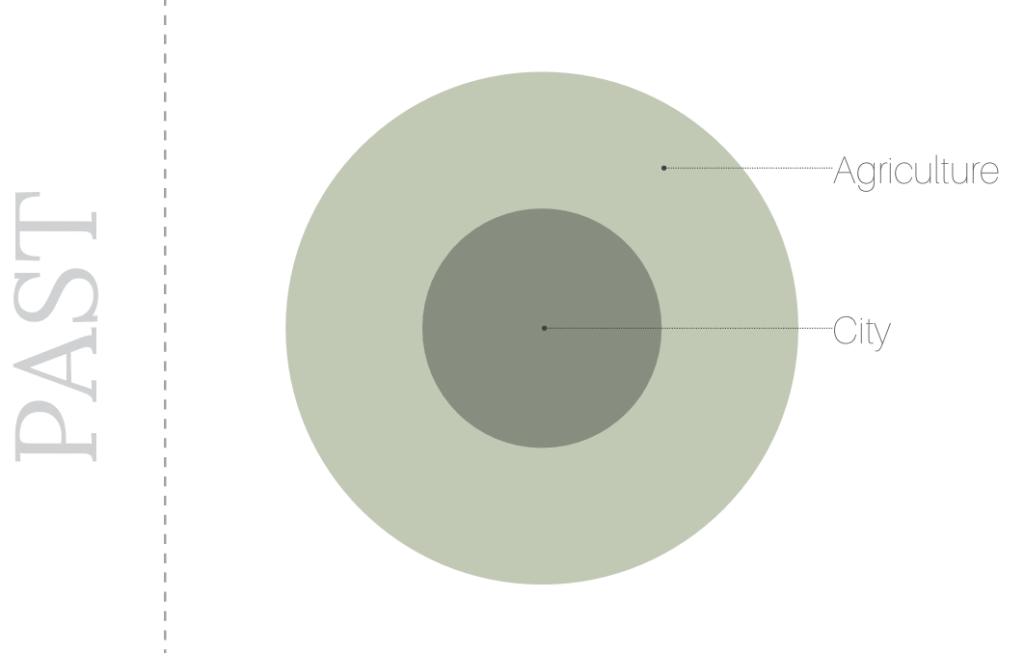
The city’s core is a mixture of various grain sizes and consists of primary roads that organically make large urban parcels of multiple sizes. In contrast, the planned settlements like Newtown and Salt Lake follow a proper street hierarchy and similar urban parcels with identical grain sizes. In the outskirts, no hierarchy is seen, and the grain is sparse with large open spaces that are agricultural fields.
City Level: Thematic Study
Location Of Migrant & Refugees
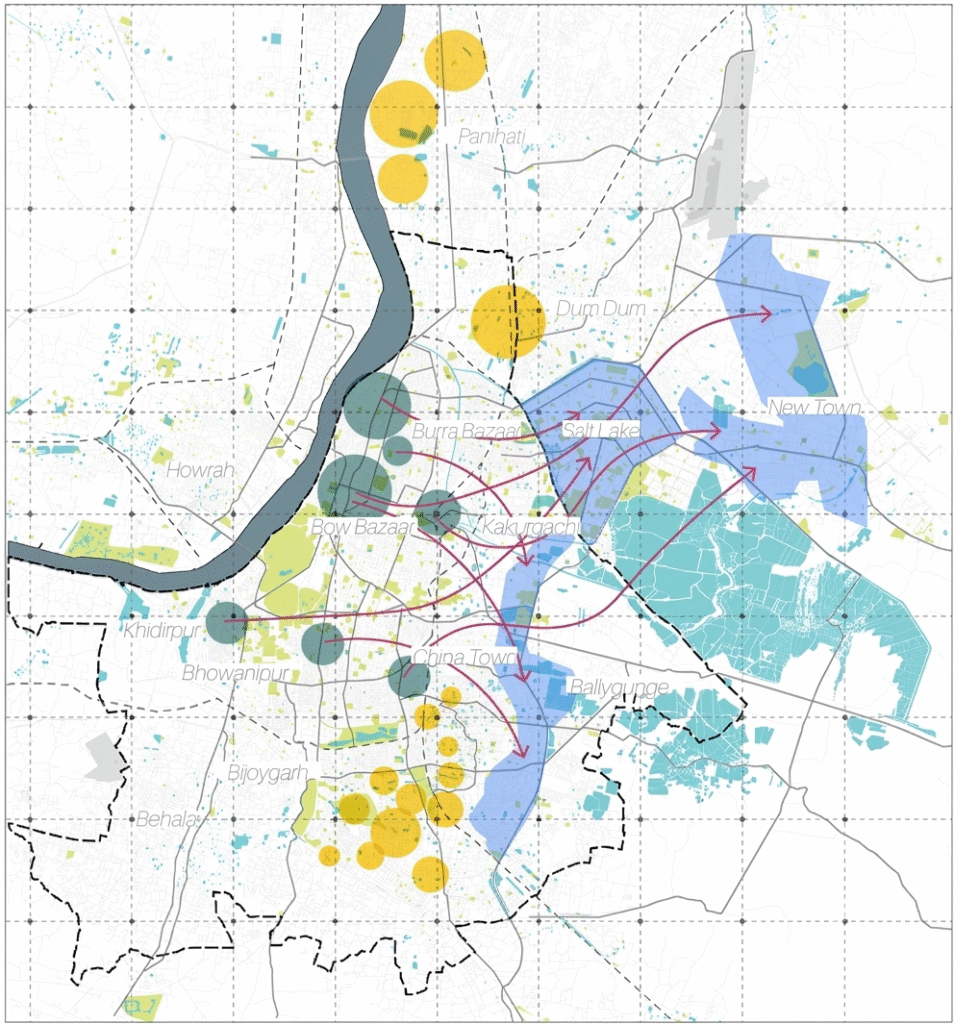
Various events have triggered the influx of migrants and refugees moving into the city’s northern and southern suburban areas. Along with the intra migration, Kolkata has also witnessed inter-migration. People from the core city have moved to the east and the south.
Economic Profile & Slums
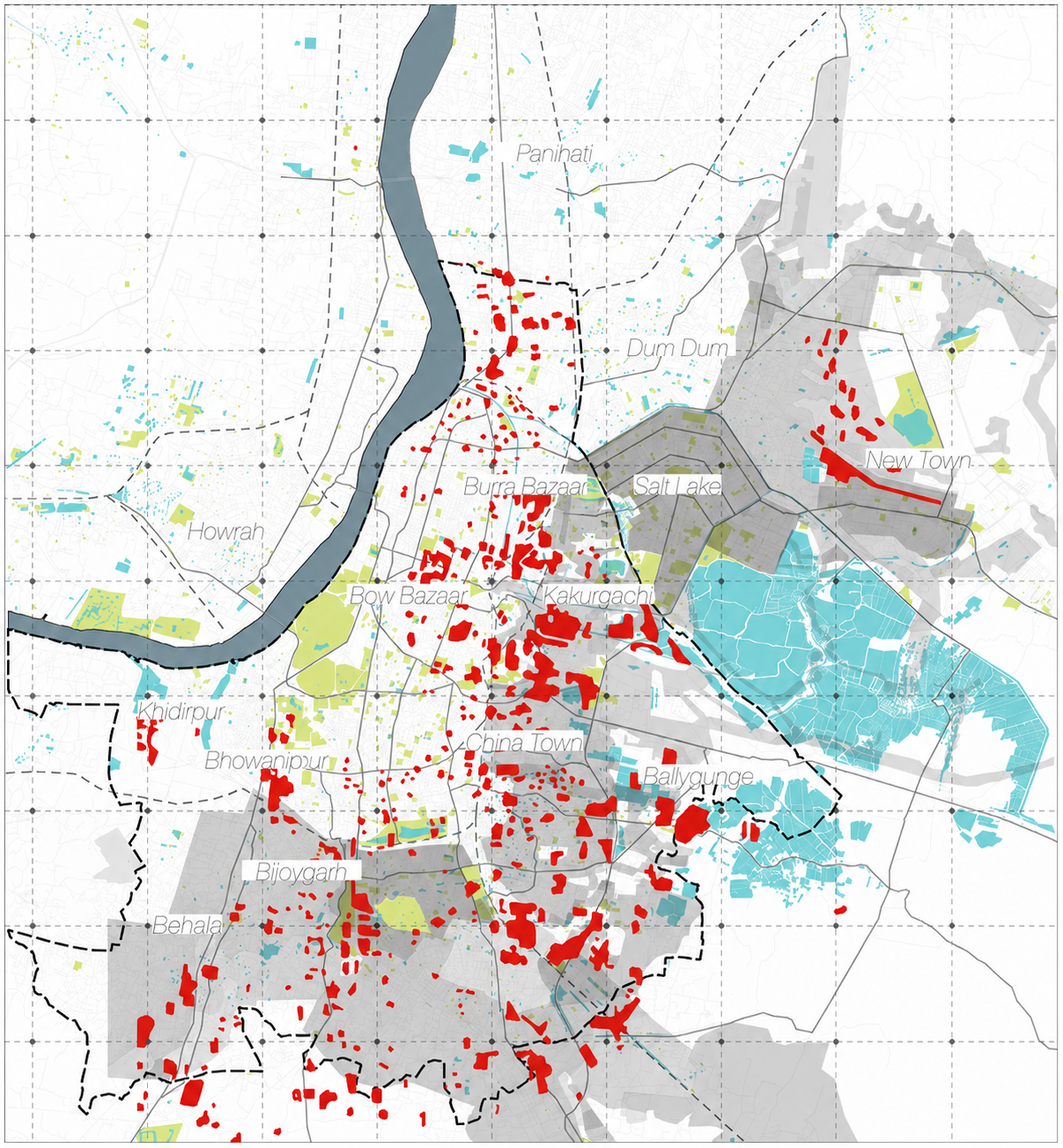
Past events have steered the growth of the slum population around the city, where the people have migrated in search of better job opportunities. Still, due to employment pressure, they end up being street hawkers and small vendors and reside in slums and squatter settlements on the fringes.
Stakeholders In City Spaces
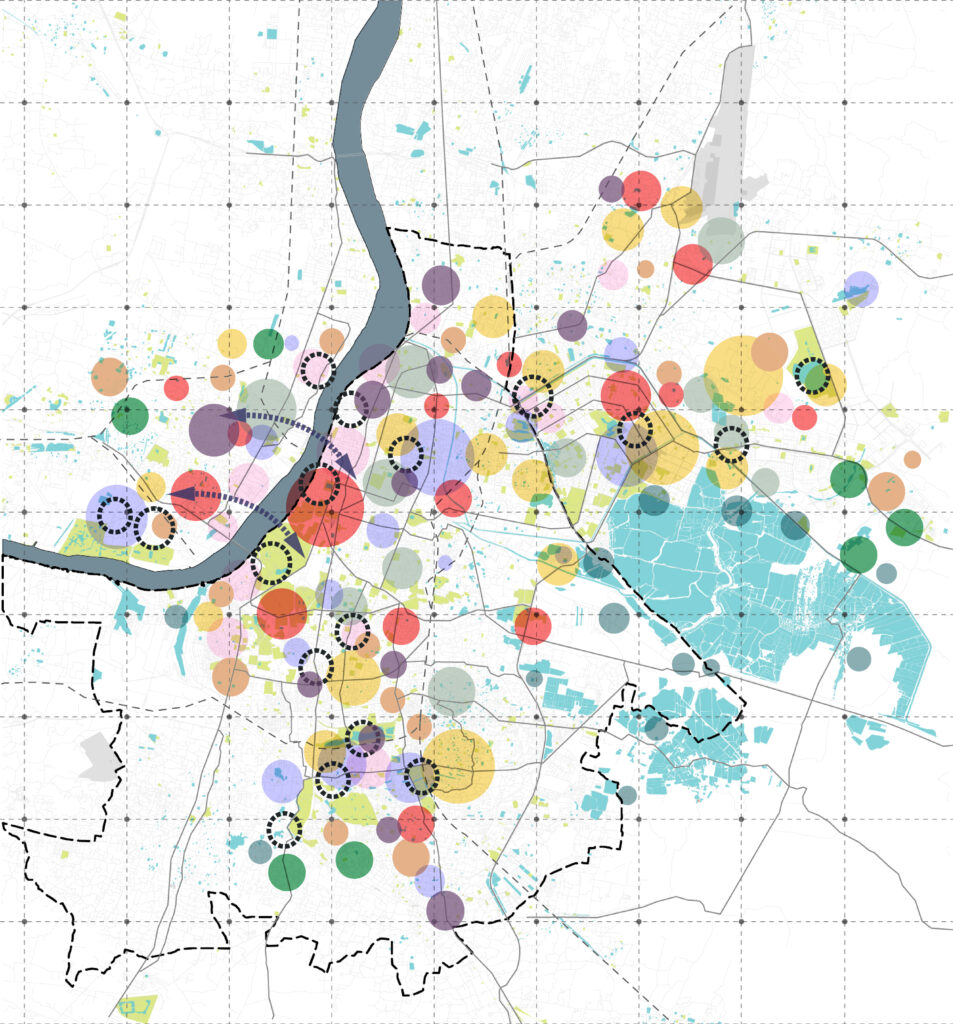
Past events have steered the growth of the slum population around the city, where the people have migrated in search of better job opportunities. Still, due to employment pressure, they end up being street hawkers and small vendors and reside in slums and squatter settlements on the fringes.
Wedge Level: Preliminary Study
Study Area: The Wedge
Wedge 1 forms part of ever evolving change and political manifestations of Kolkata’s image of new economic development and model New Town. Located at a strategic location from Airport, E.M. Bypass, Salt Lake City, IT Sector and VIP Road.
Functional Disposition Of The Wedge
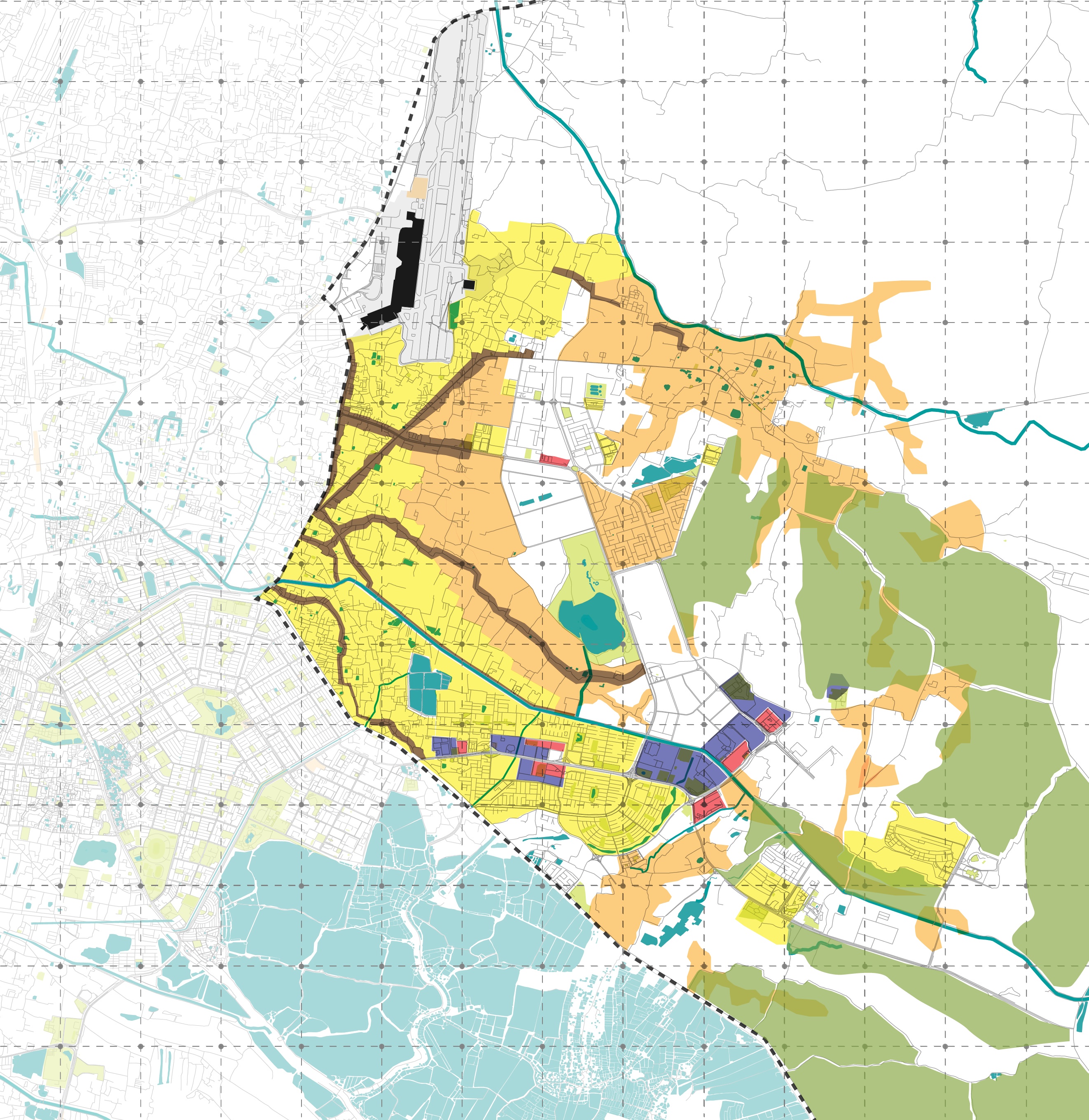
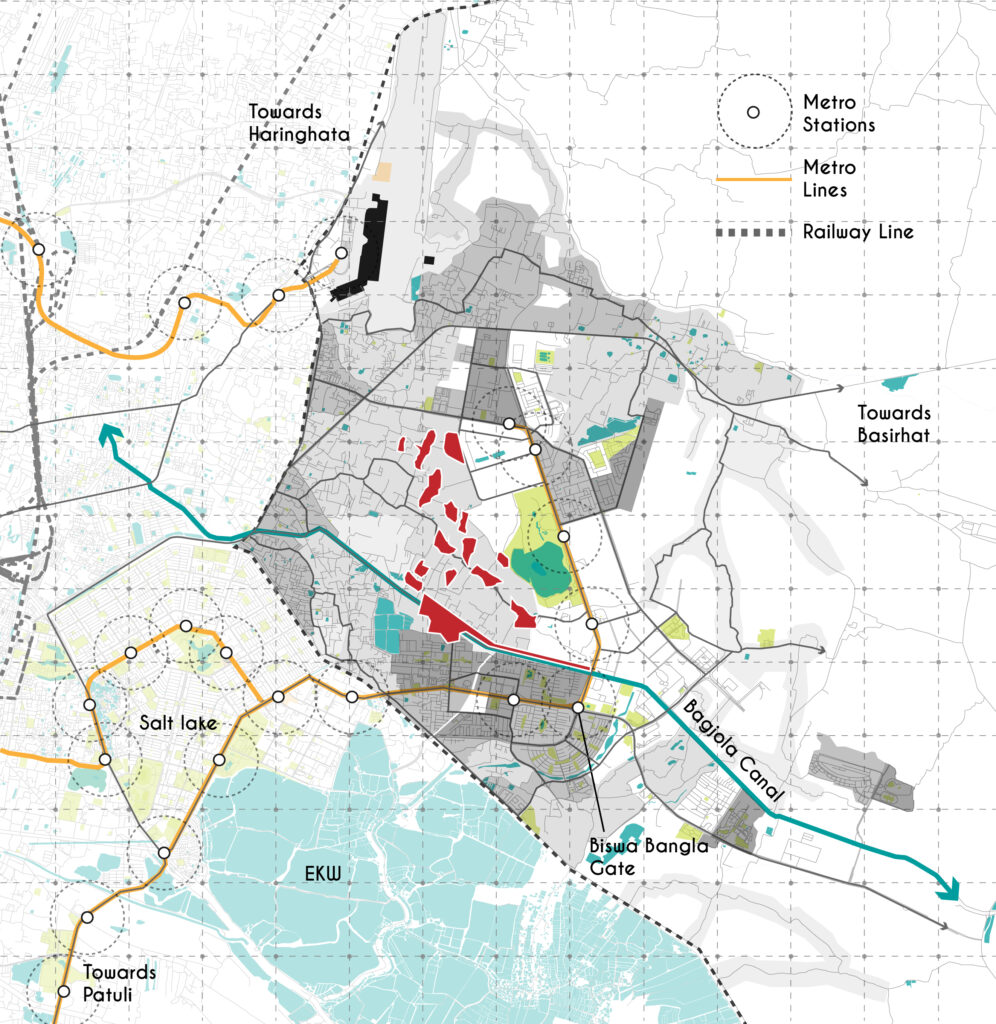
The functional disposition of New Town is in conjunction with its desire to be projected as a Global City. Functional Zones are clearly defined with negligible mixed-use zones and increased commercial/mixed-use activities along the secondary arteries. Leisure and recreational activities are exclusive to certain areas.
Settlement Patterns Of The Wedge
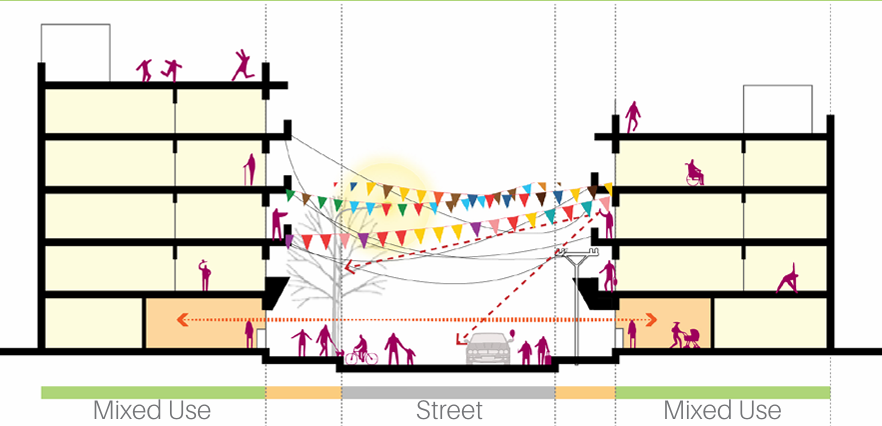
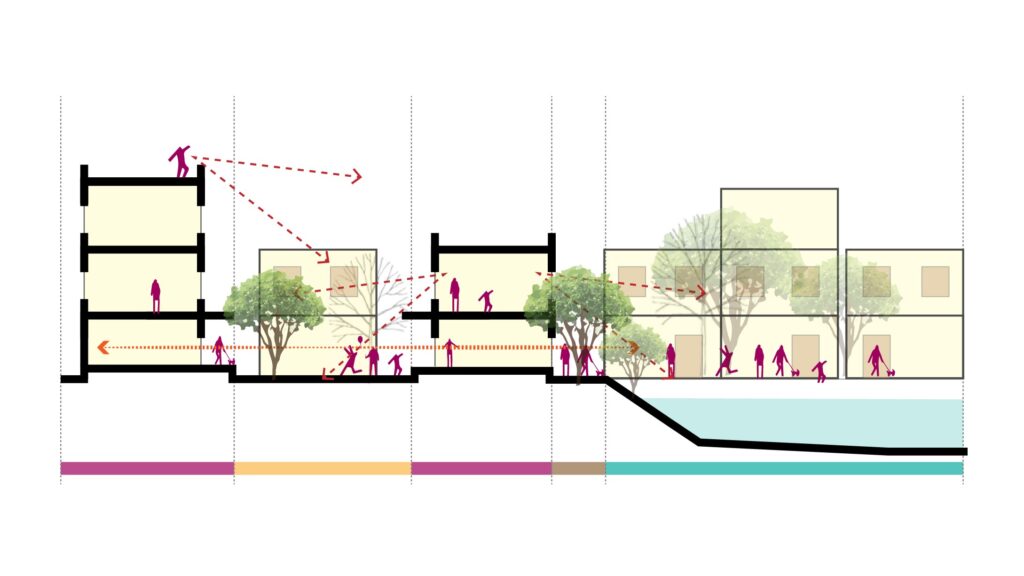
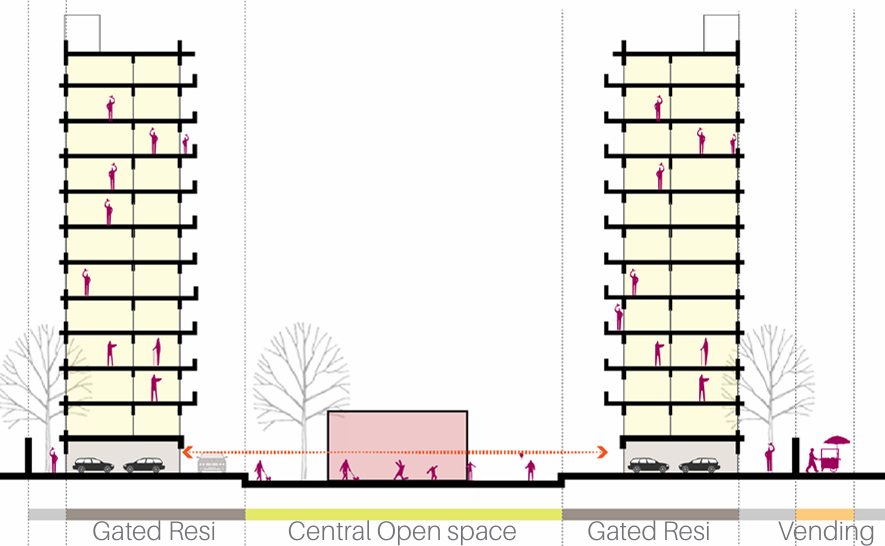
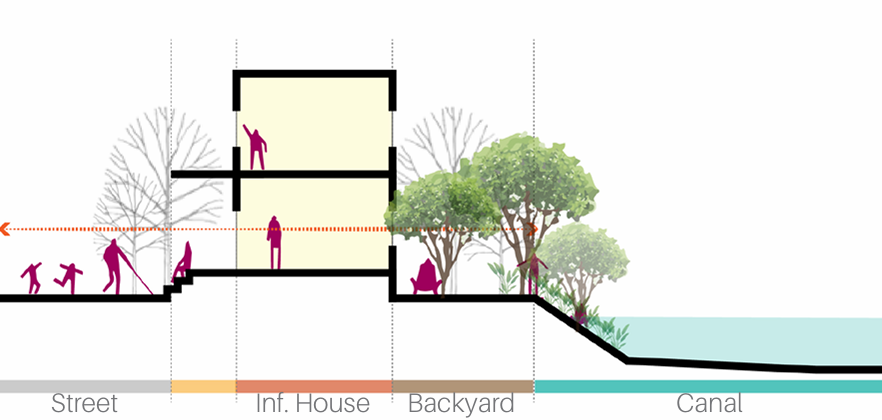
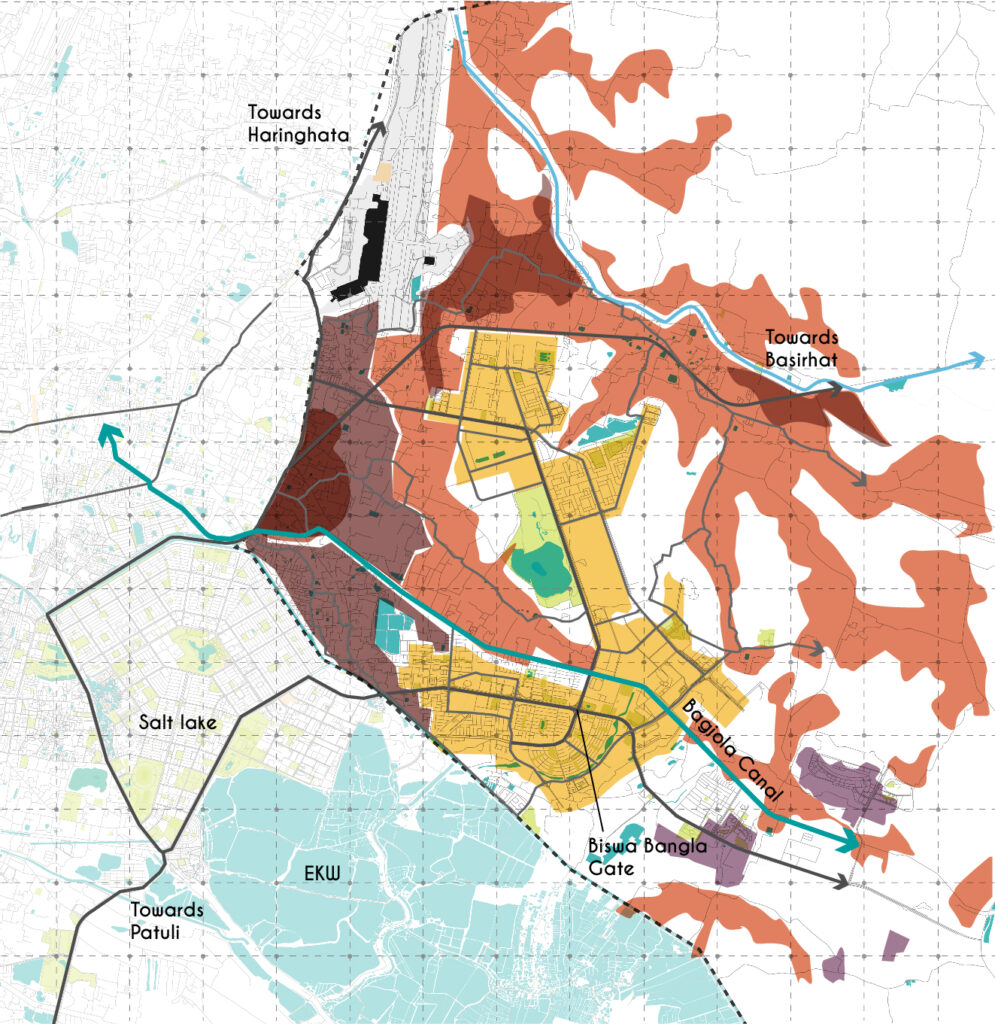
Studying the physical housing typologies predominant at the city’s fringes helps understand Kolkata’s growth. Following is a map of main house typologies accommodating the increasing population and spatially segregated communities in the wedge. The plans and sections also paint a picture of the difference in living conditions for each community.
Wedge Level: Thematic Study
Affordability Of The Wedge
The affordability of the wedge area is highly unpredictable as it is interlinked with the ownership of the plots. As the wedge is under development, many land plots are under the pressure of acquisition, which will undoubtedly transform the current affordable plots into unaffordable.
Economic Profile Of The Wedge
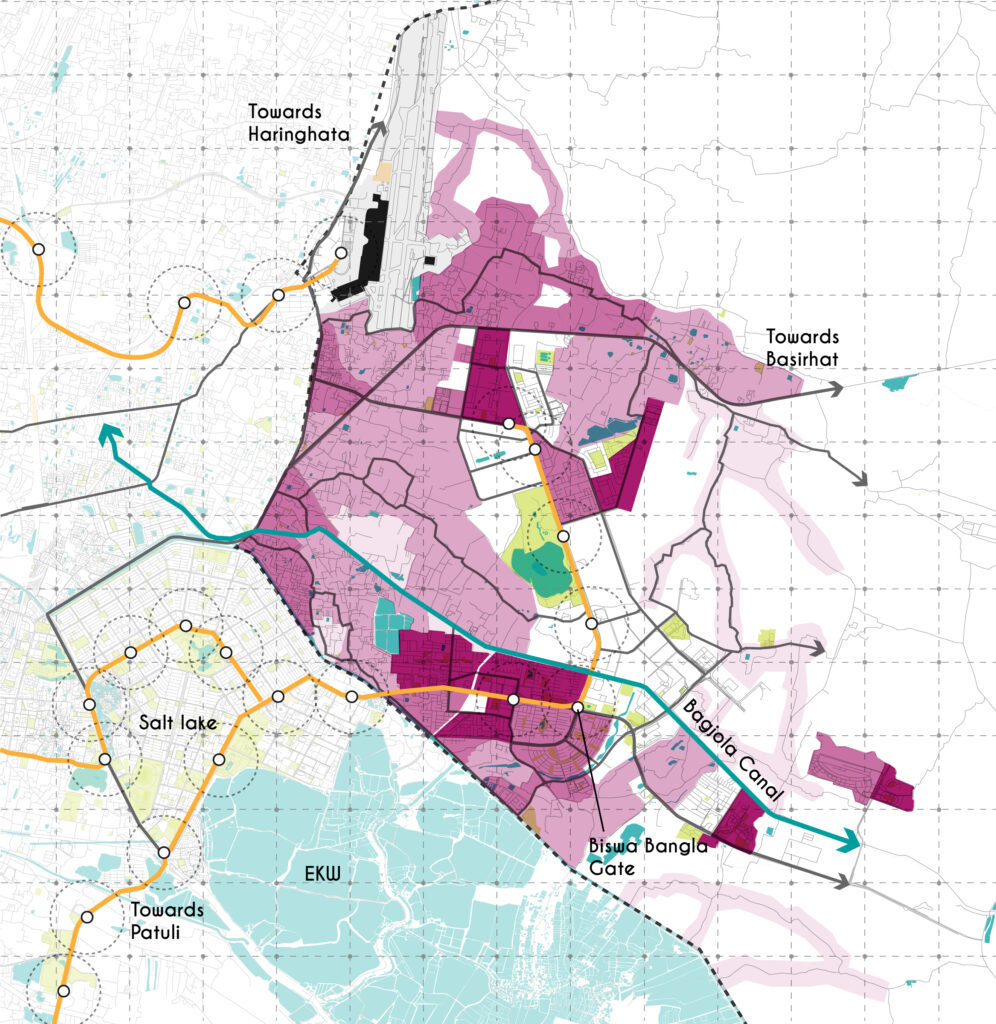
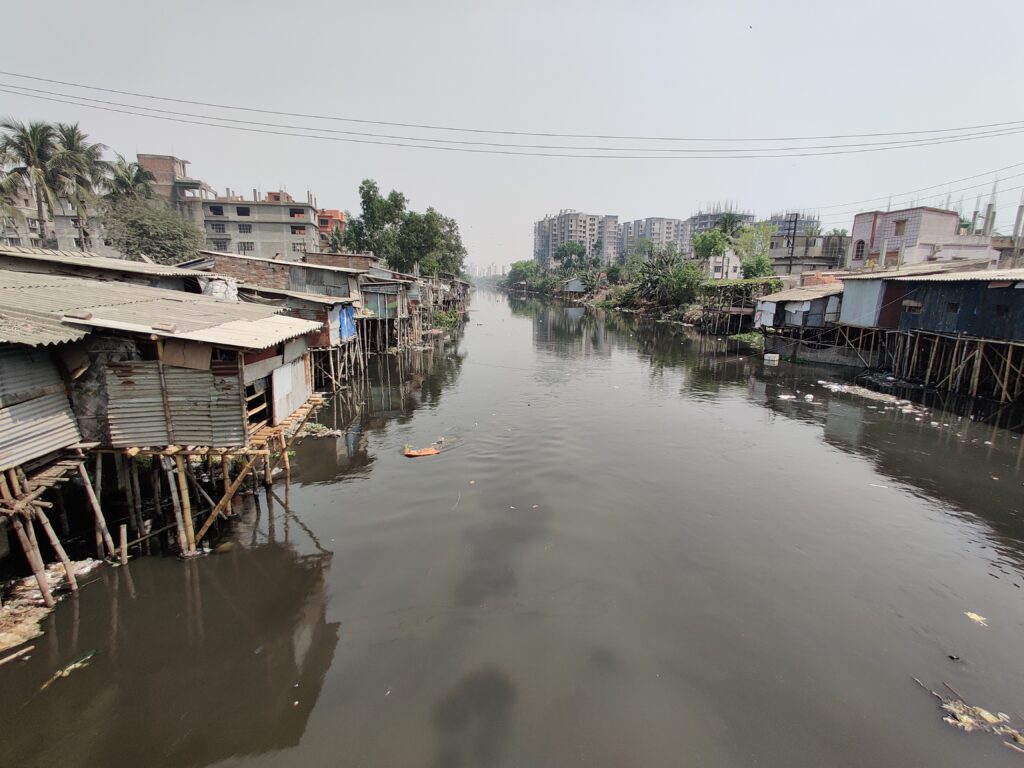
The vulnerable communities are dispersed mainly at the center of the wedge along the Bagjola Canal. Many public spaces are aligned along it which acts as binder of activities and function in the wedge but still doesn’t generate any public life beyond specified locations.
The Residents Of The Wedge
After the war of 1971, many immigrants from Bangladesh settled here. The development of New Town began, and land acquisition and infrastructure development attracted more migrants. Later, CBD developments attracted more NRIs, HIGs and MIGs to invest and settle in the wedge.
Area Level: Design Ideation
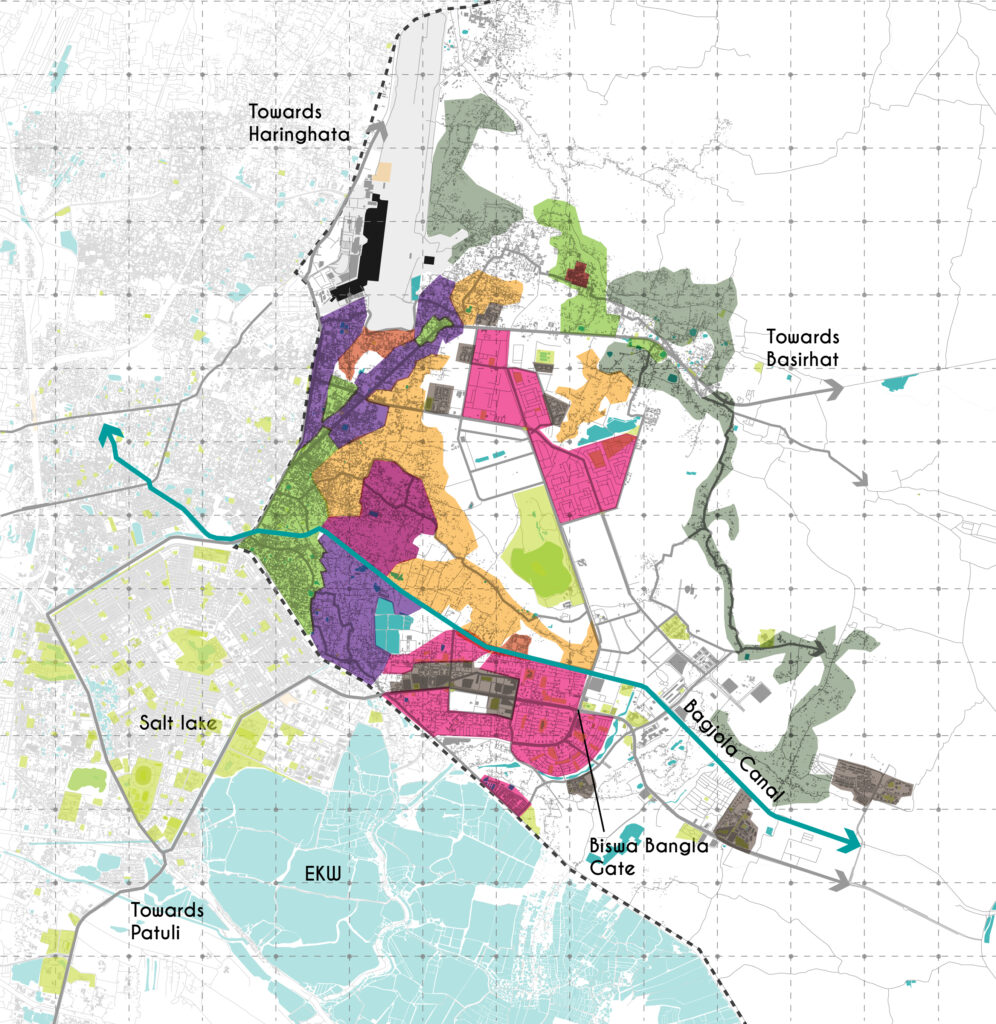
Existing Structure Plan
Current Scenario
DEACTIVATED
UNATTRACTIVE
NO ASSOCIATION
INANIMATED
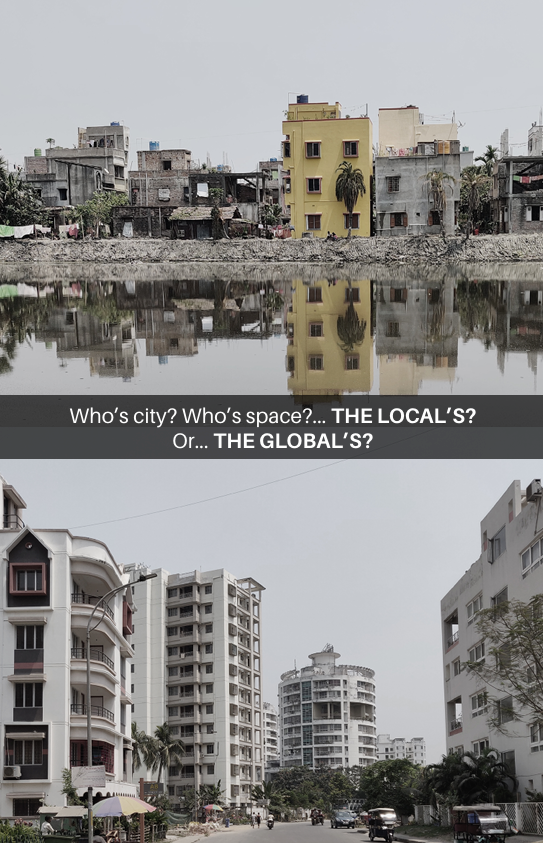
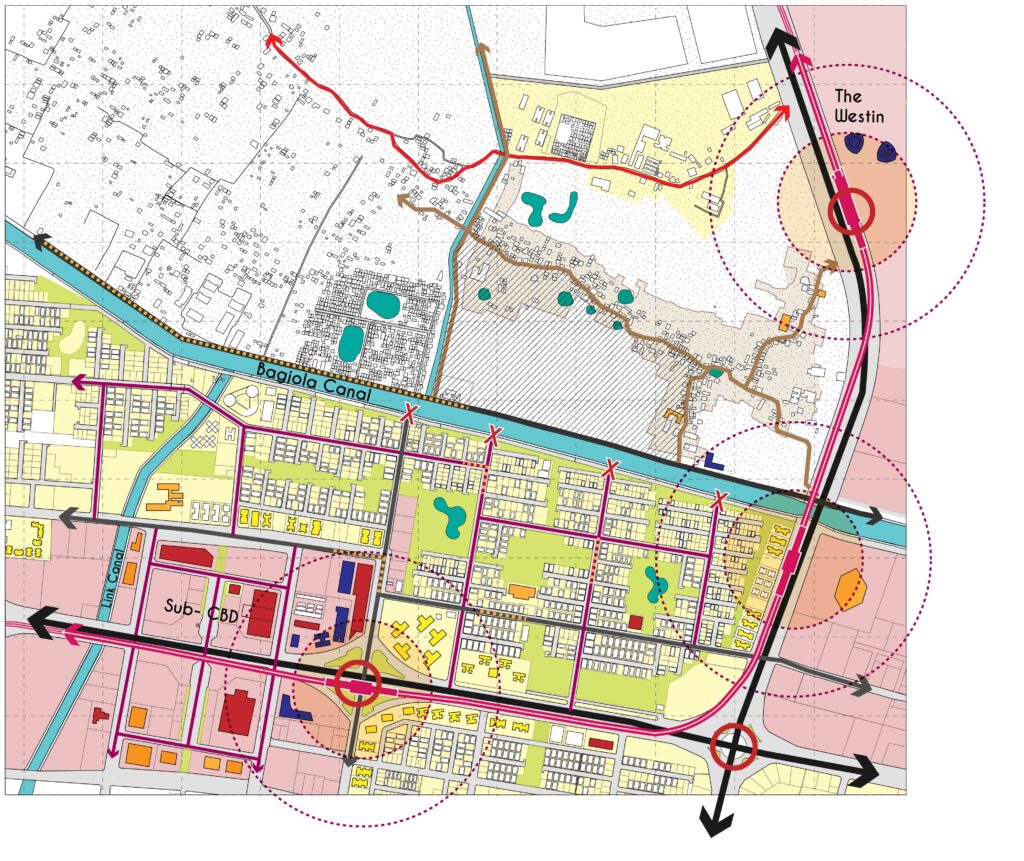
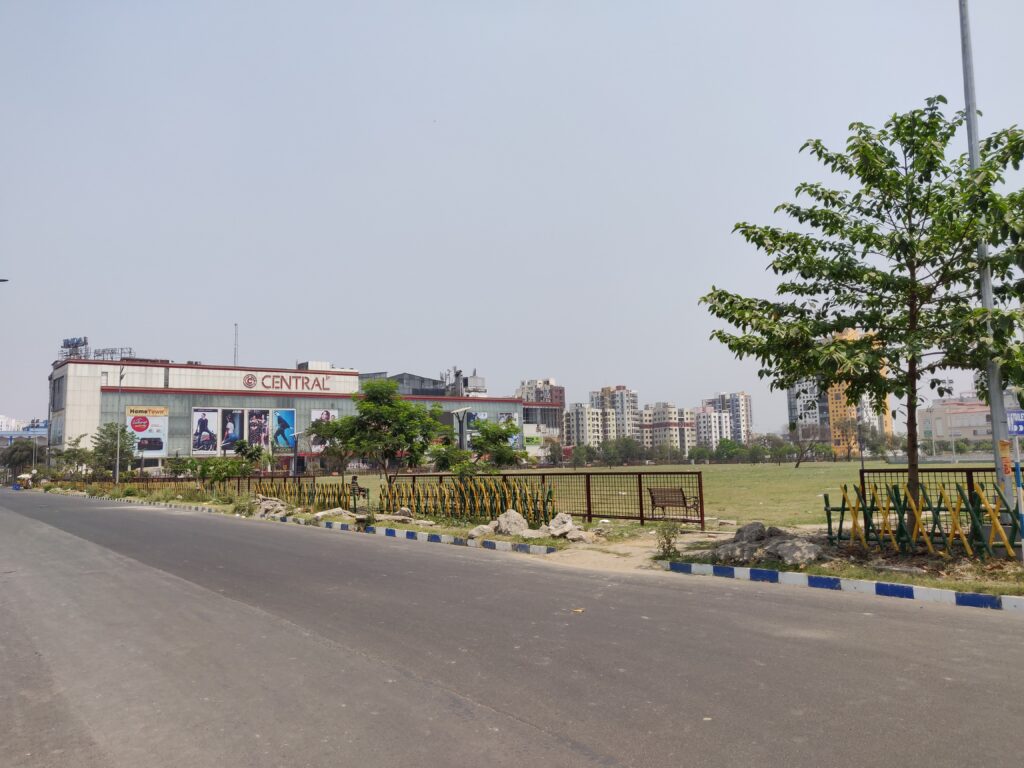
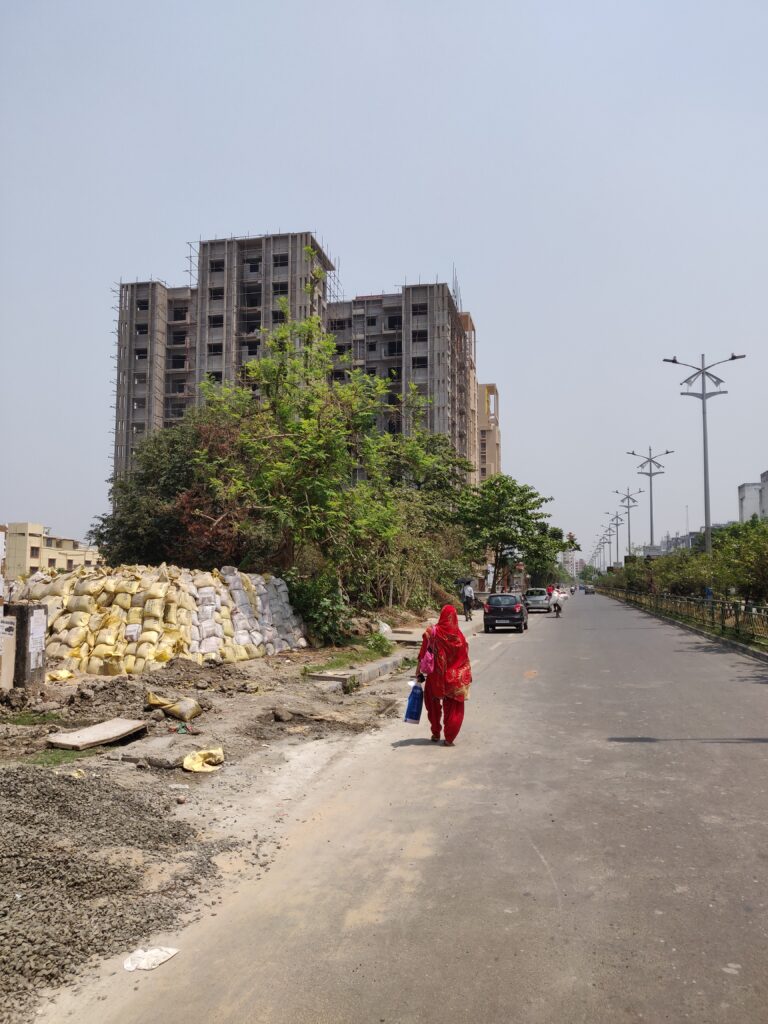
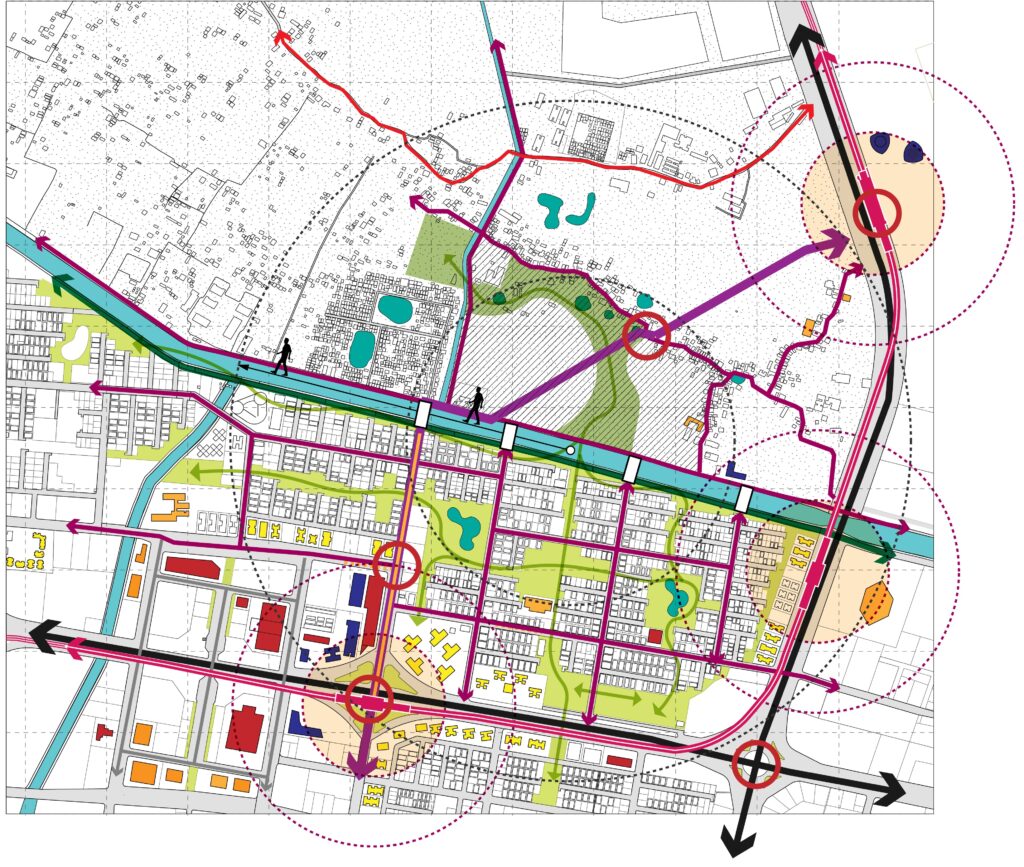
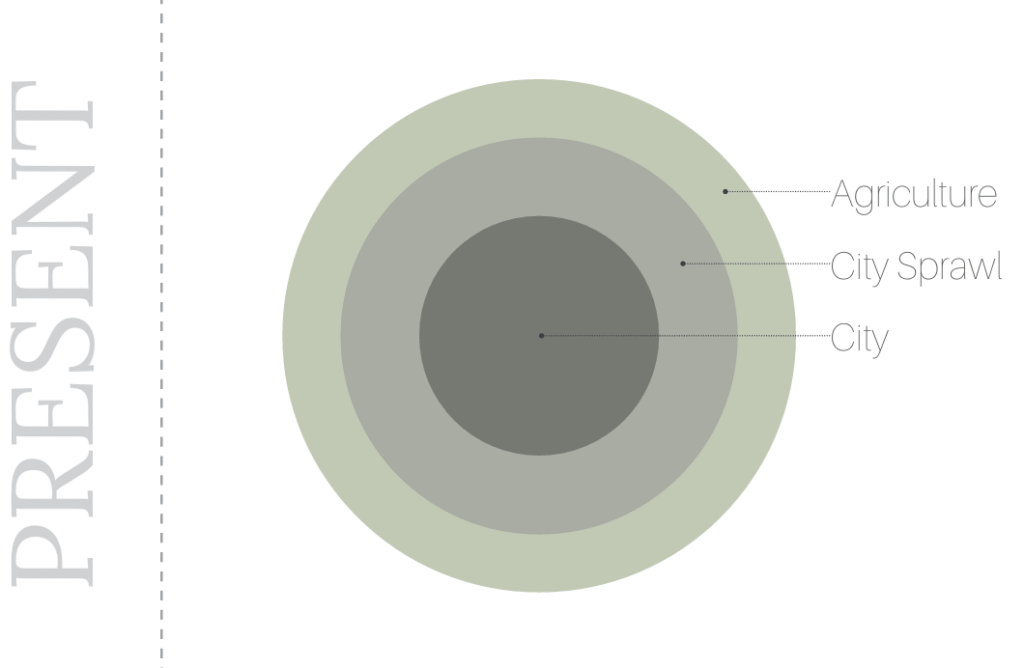
A lack of association between people living in townships & native villages. The expropriation of land & the global development approach has decreased traditional inclusive spaces for interaction. No accessible linkages over the canal would directly connect the native areas & the gated communities. Recent developments by the government with private entities have led to Peri-Urbanization, thus creating exclusion.
Proposed Structure Plan
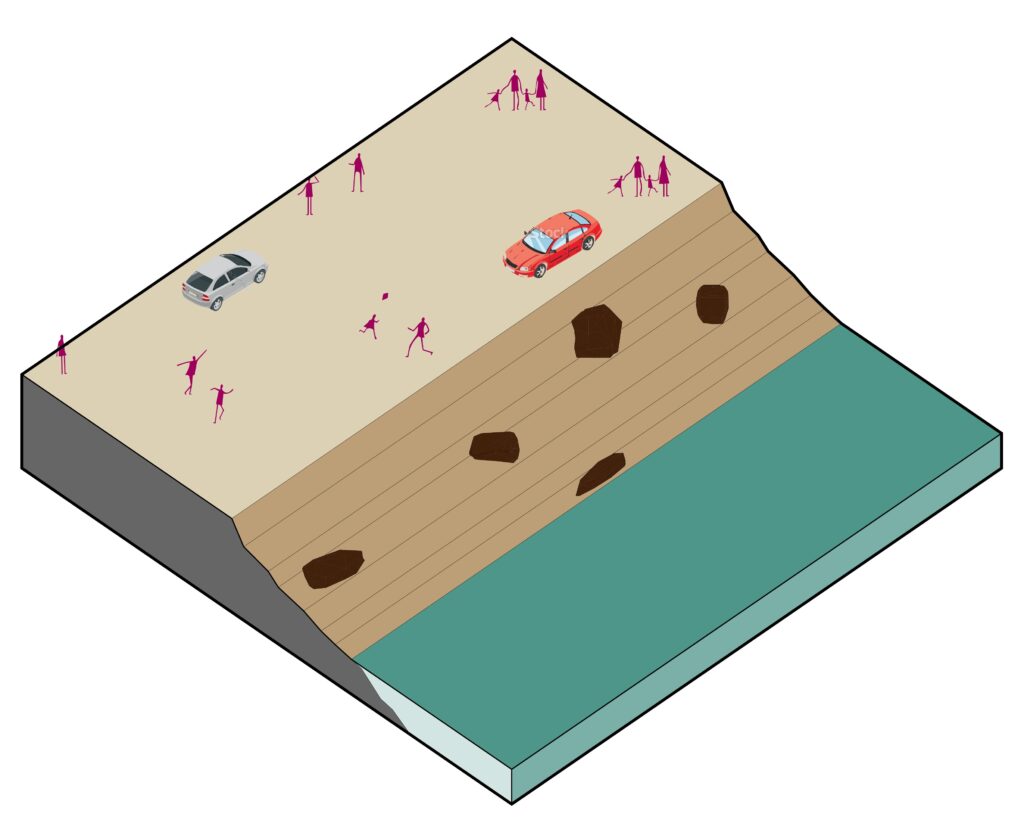
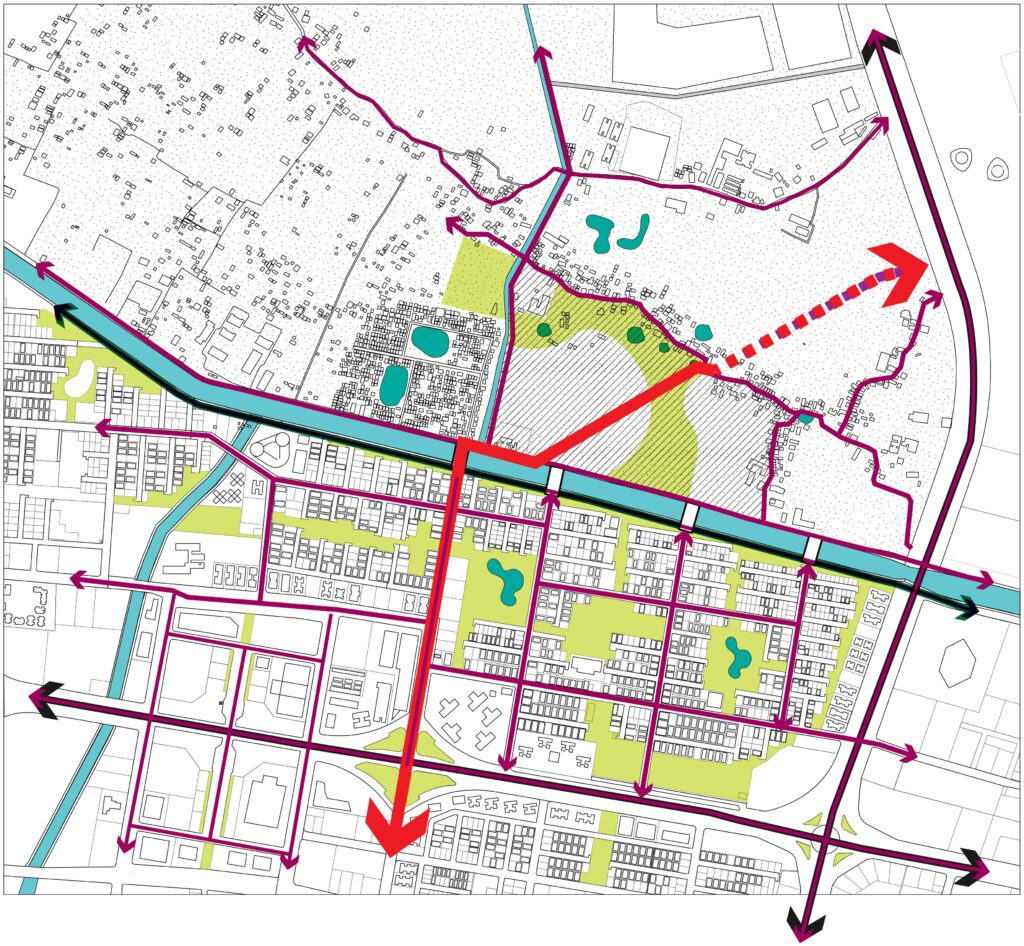
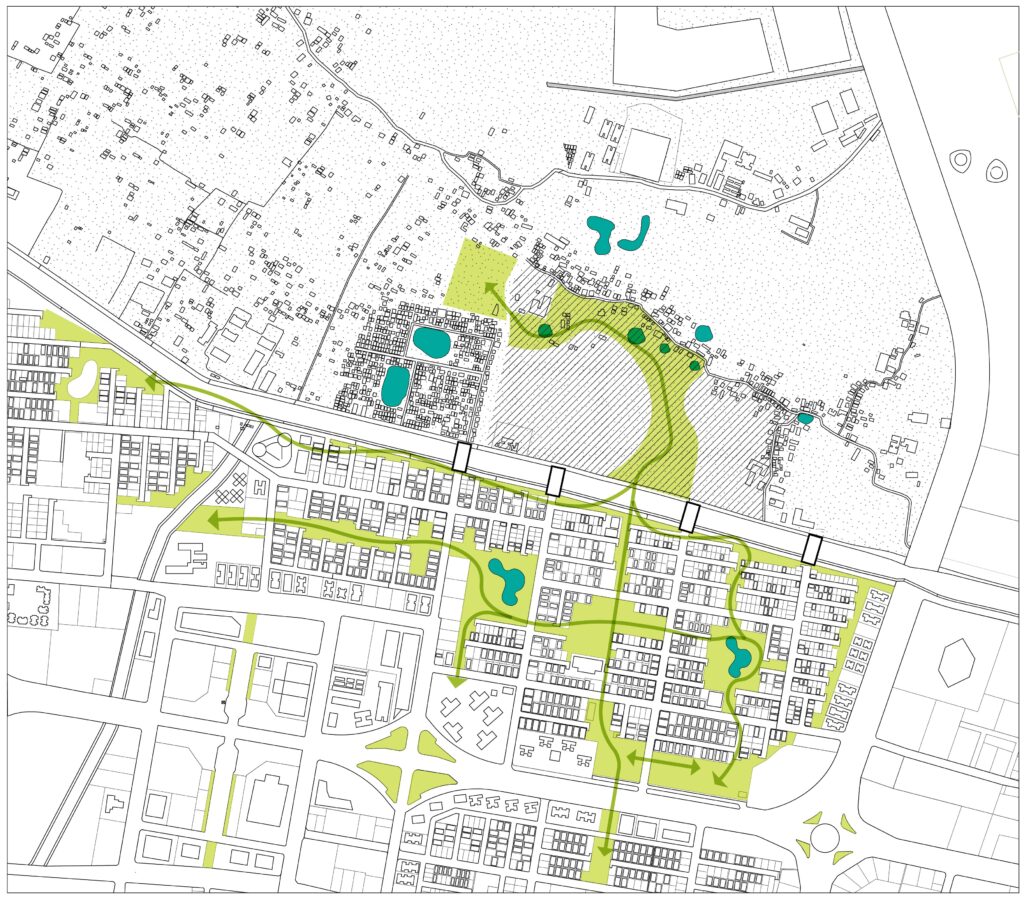
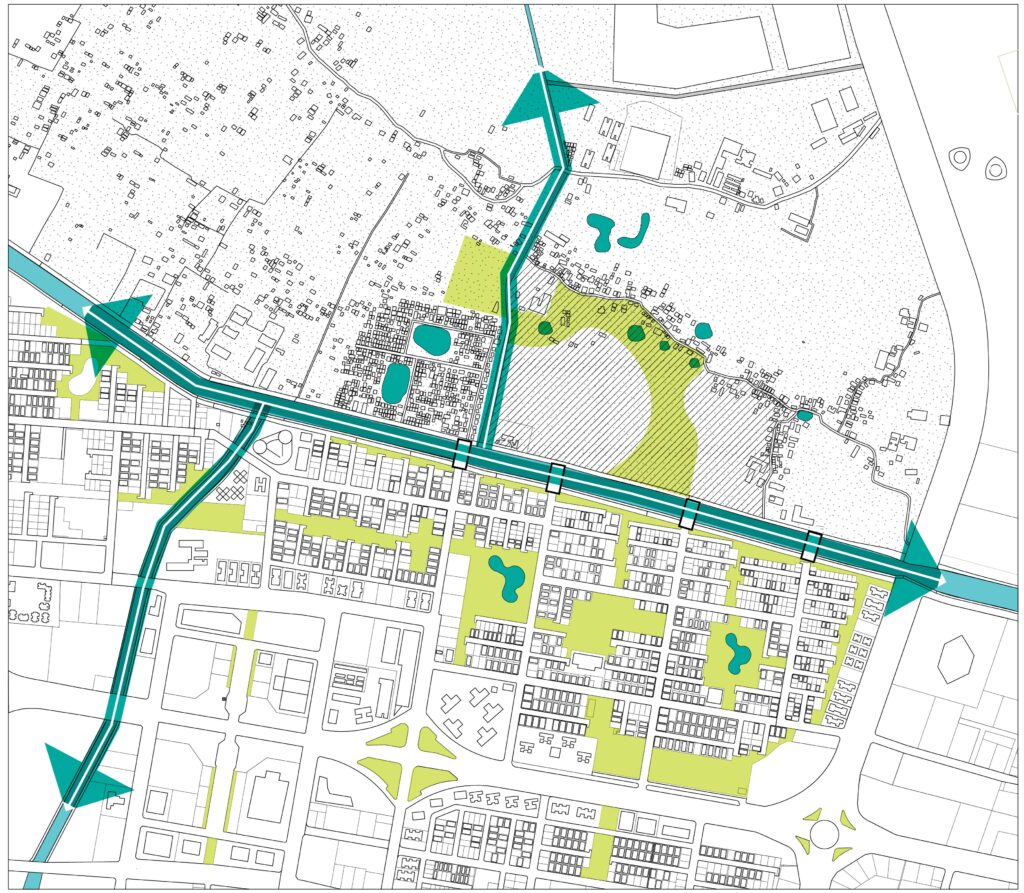
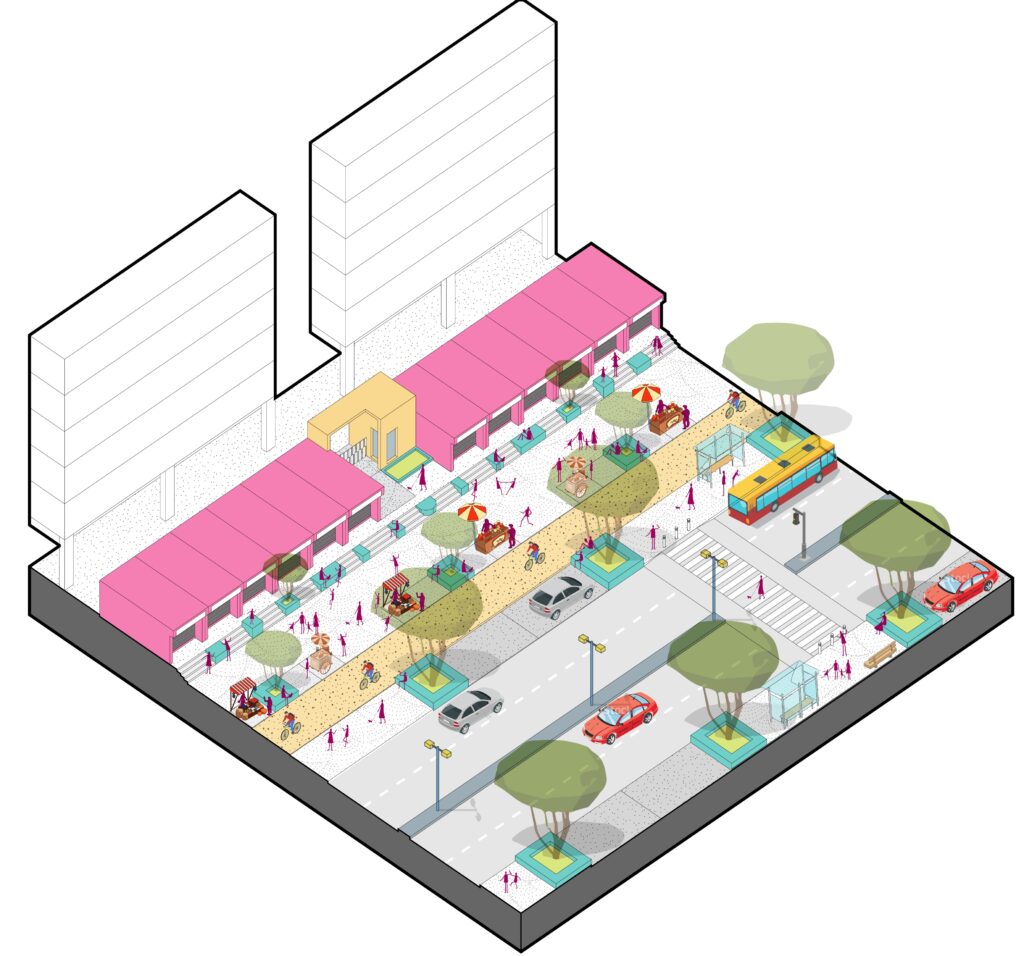
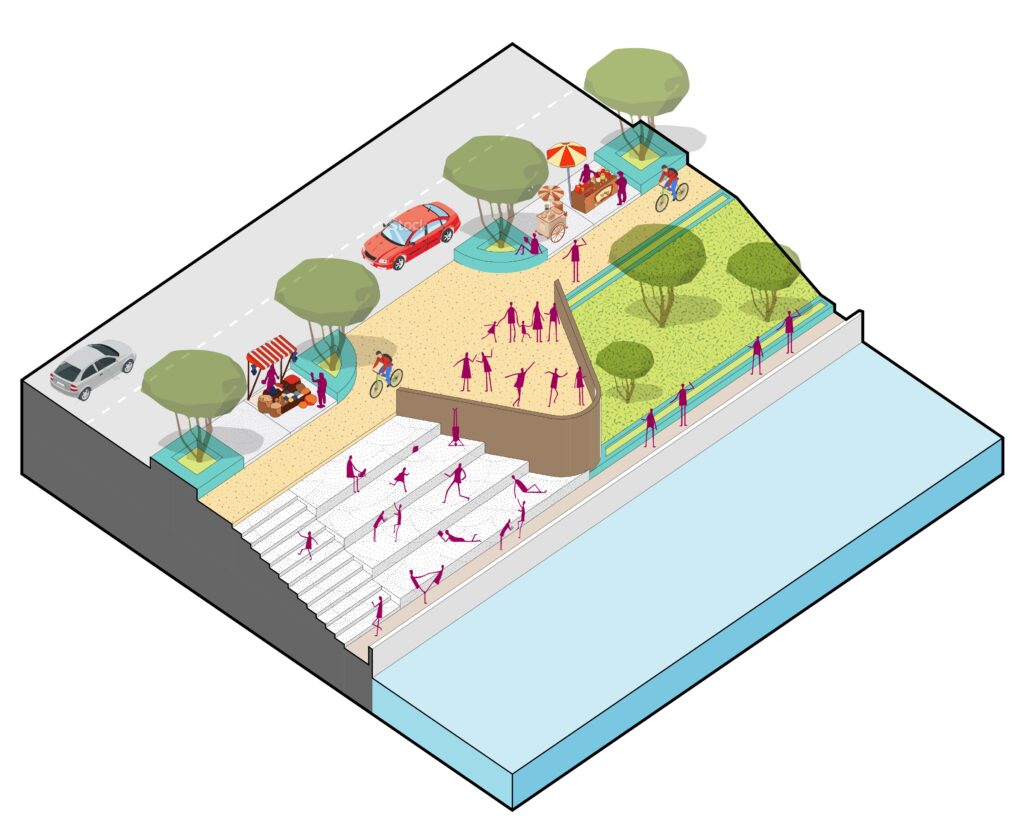
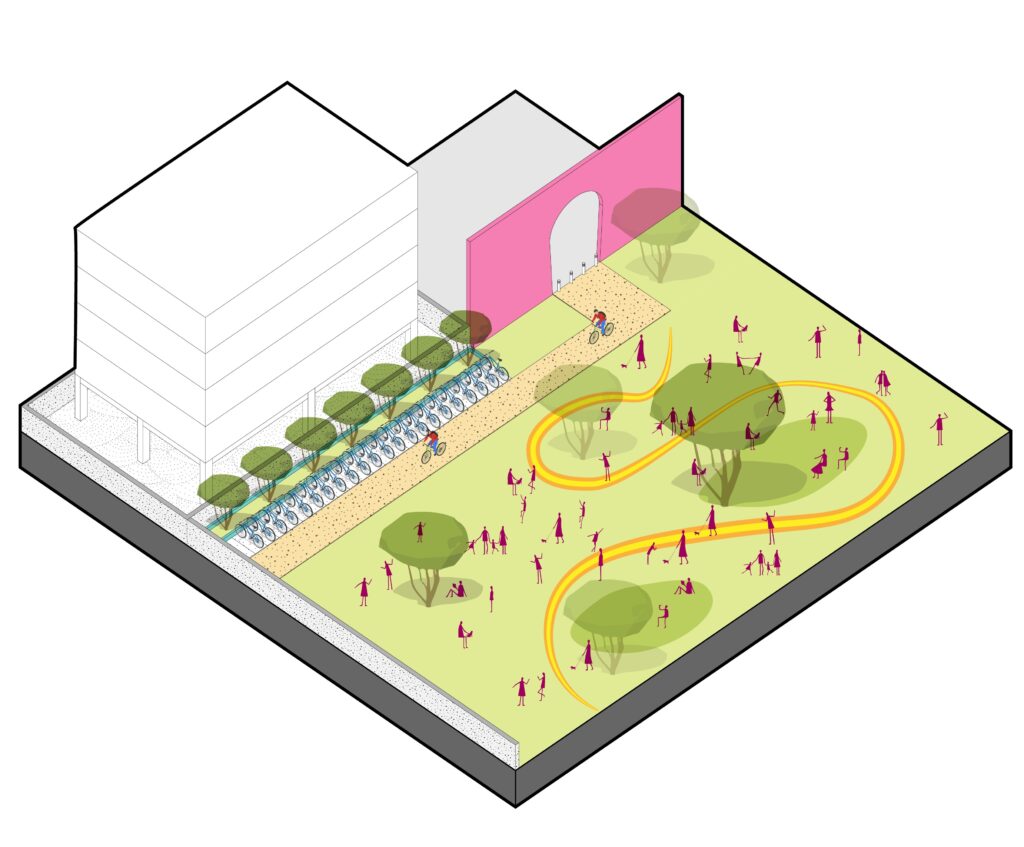
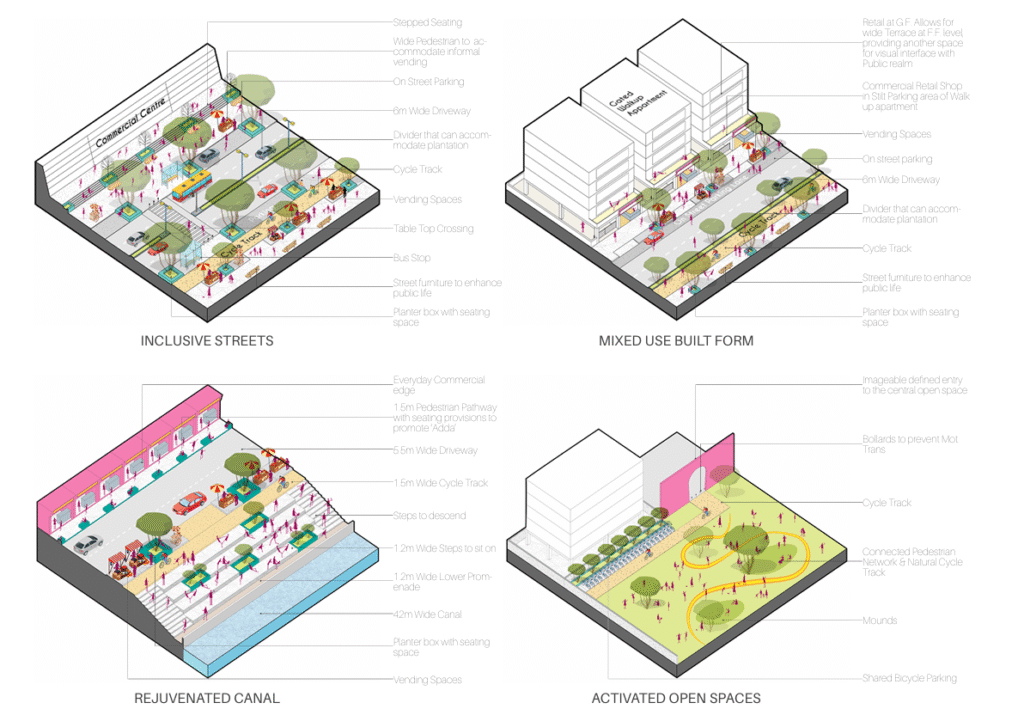
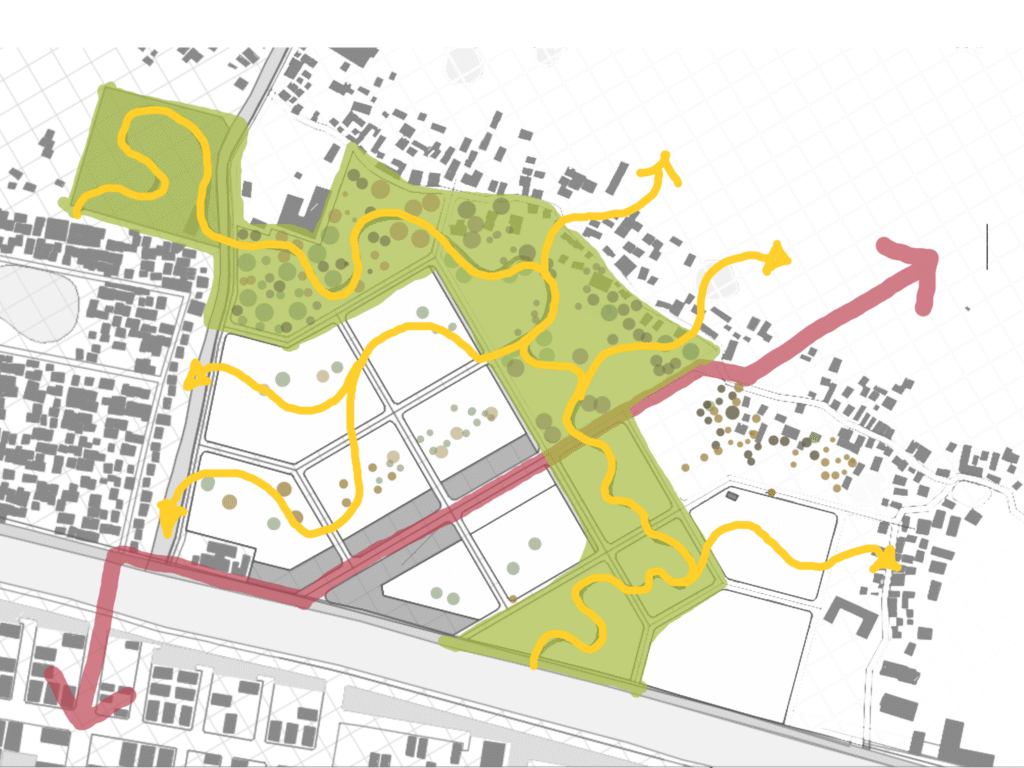
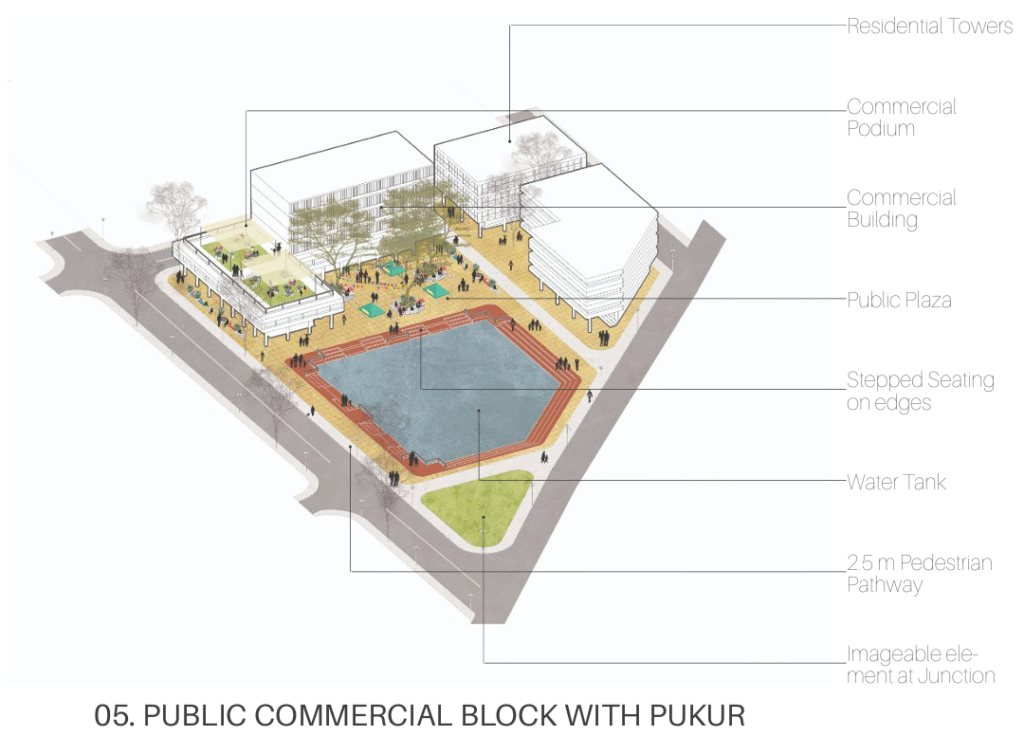
Provision of bridges over canal with informal commerce and reconfiguration of mixed-use regulation inside the arterial streets. Open spaces interconnected through green pathways with enhanced permeability. Along the canal, creation of Rural Riparian edge with recreational activities and informal commerce. Creation of new mixed-use street that would trigger the development in greenfield area.
Vision & Proposed Scenario
ACTIVATE
ATTRACT
ASSOCIATE
ANIMATE
To reinstate the notion of collective associational life in New Town that would represent the layers of inclusivity and inter-dependencies through purposeful interaction and sensitive planning. Various elements defining the Public Realm have been reconfigured on the idea of 4A – Activate, Attract, Associate & Animate
Site A: Brownfield
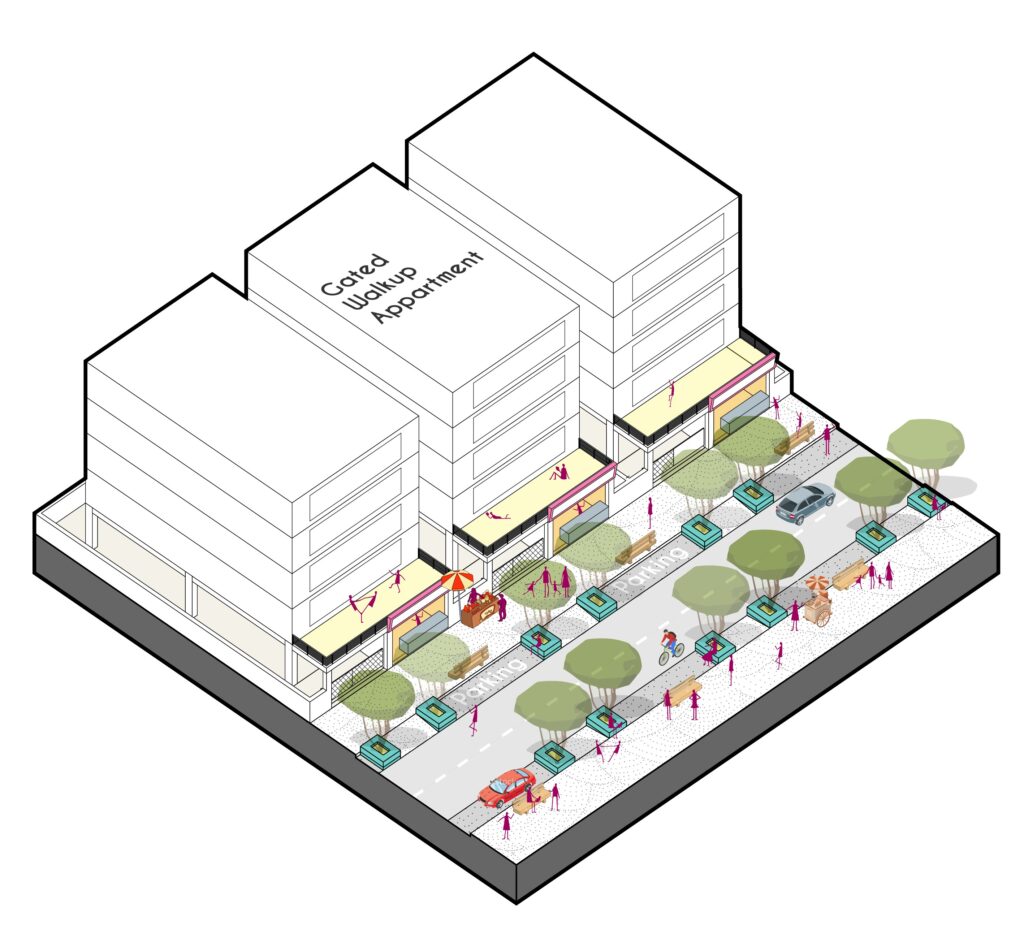
Design of an Inclusive Public Realm in existing neighborhood.
SITE B: GREENFIELD
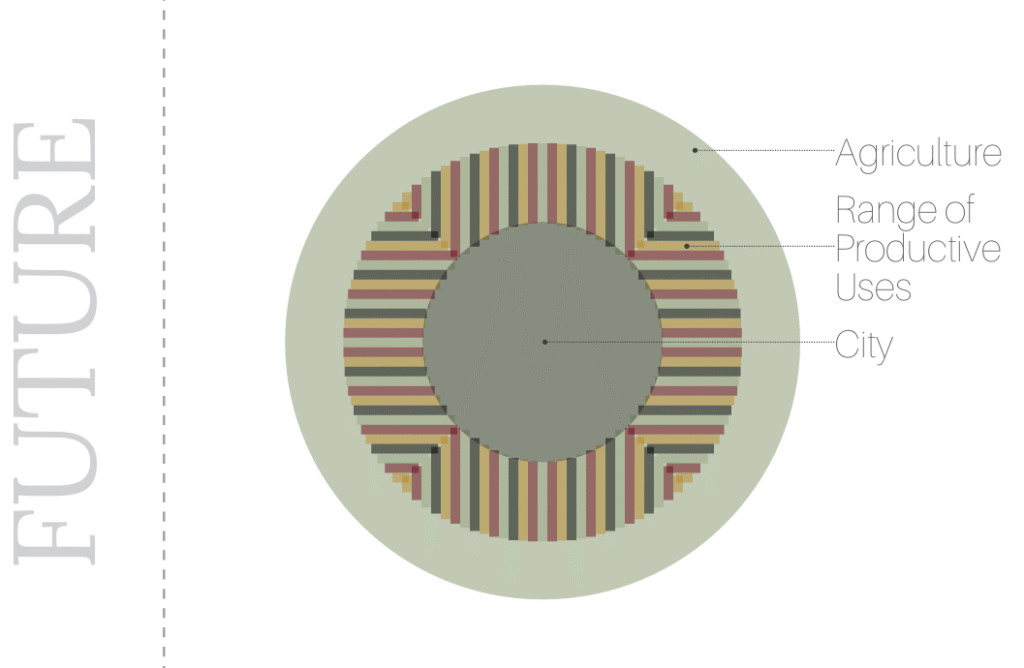
Designing Future Growth when Urban meets Rural
Neighborhood Design Ideas
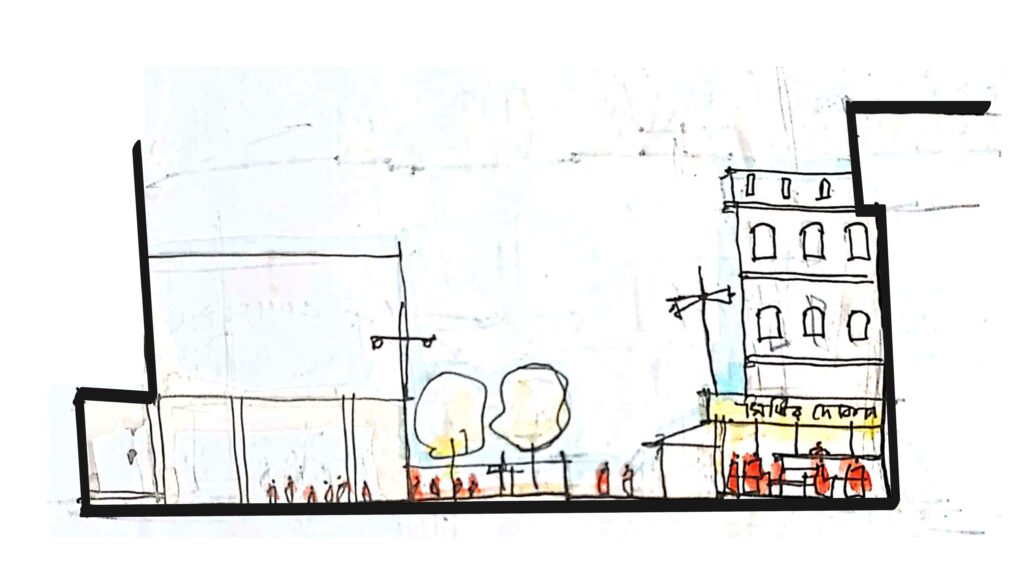
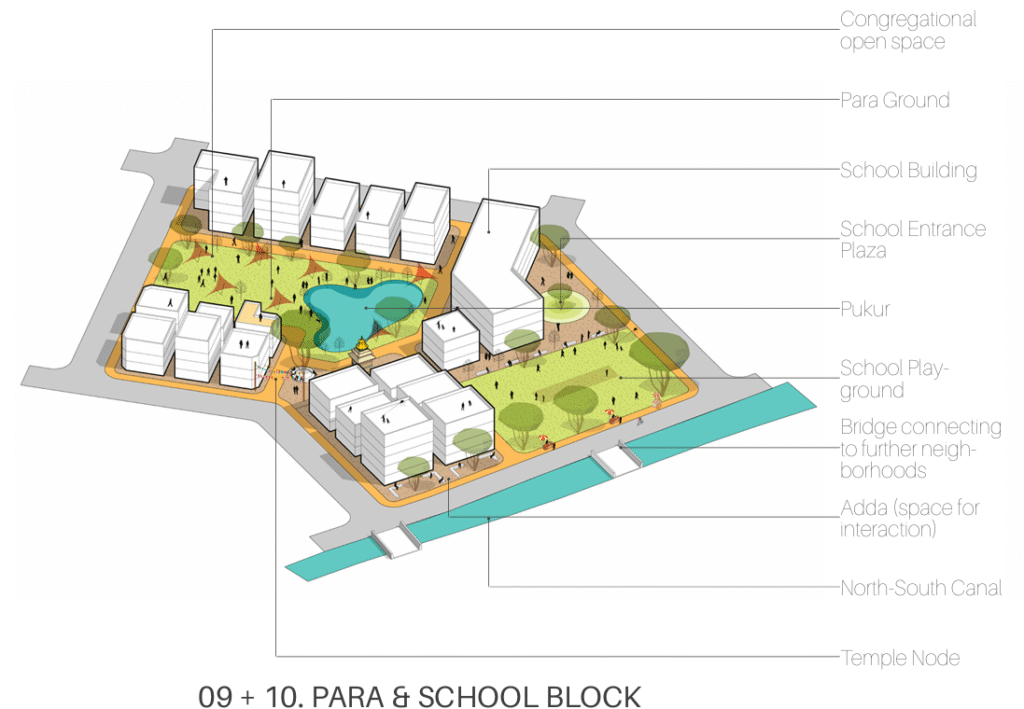
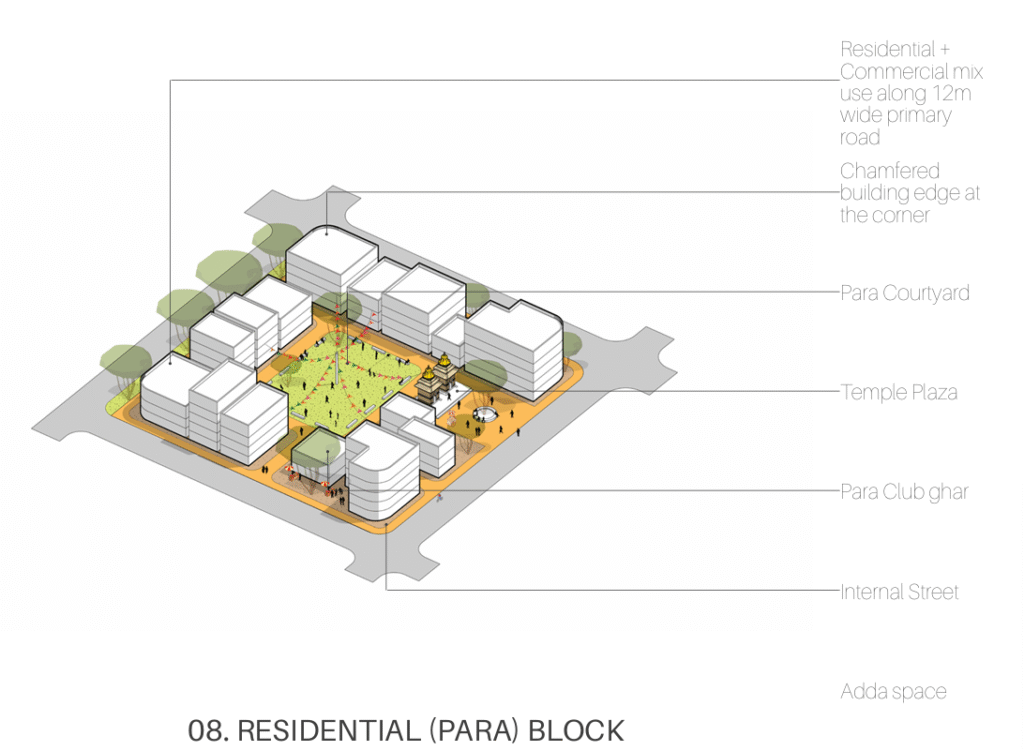
Organising the built form & open spaces inspired by Para culture to increase urban & rural purposeful interaction
MOVEMENT NETWORK Creating a direct link between two Metro stations & secondary & tertiary link between canal & existing village
OPEN SPACE NETWORK Interconnected open space network through pedestrian walkways
BUILT FORM RESPONSE The built from is carved from the sectoral spaces created
Form Based Codes
Organising the built form & open spaces inspired by Para culture to increase urban & rural purposeful interaction
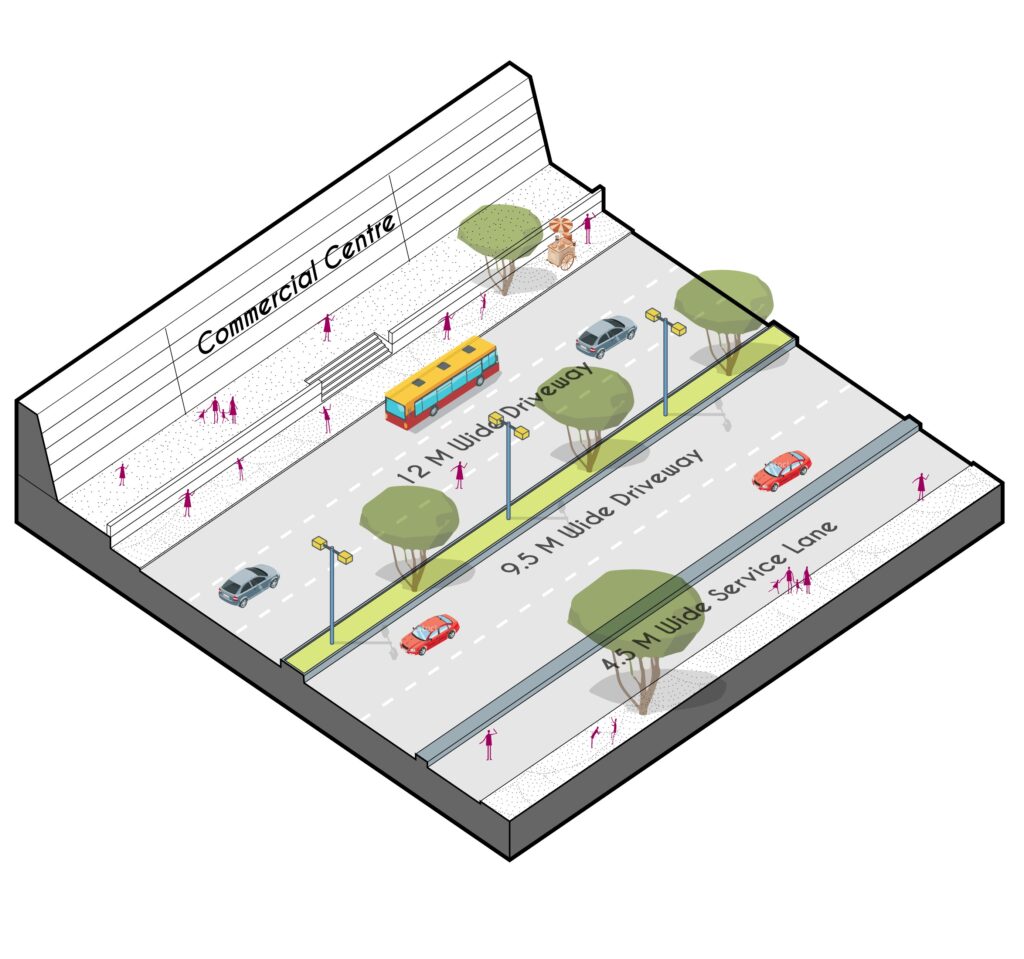
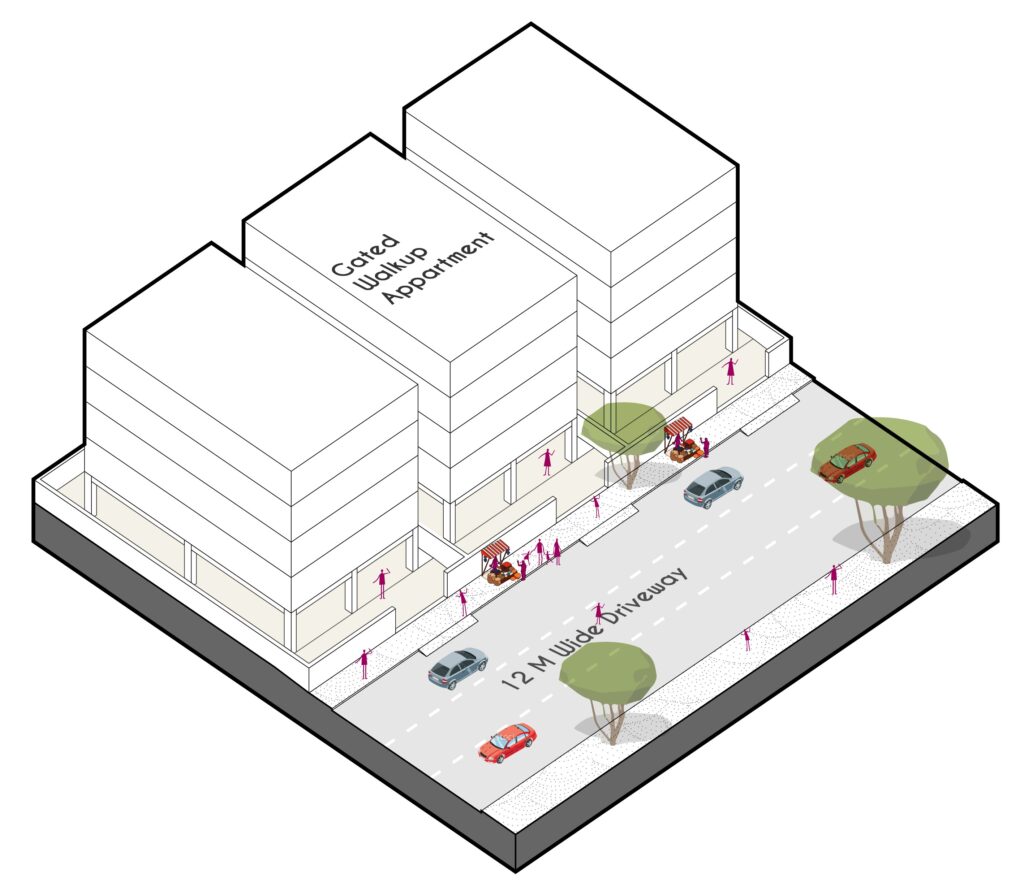
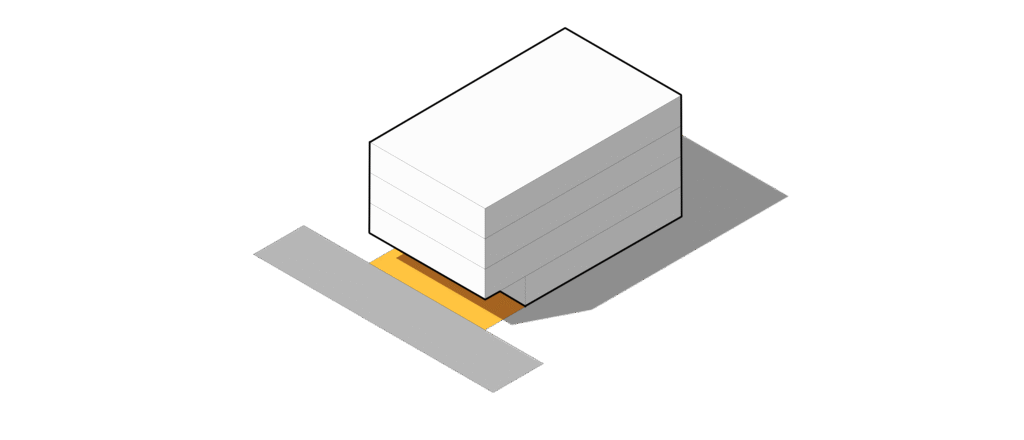
Buildings along primary roads shall be built till edge.
Buildings on primary road should have mixed use with retail and commerce on ground floor.
Buildings along secondary road can have a setback of 1.5m
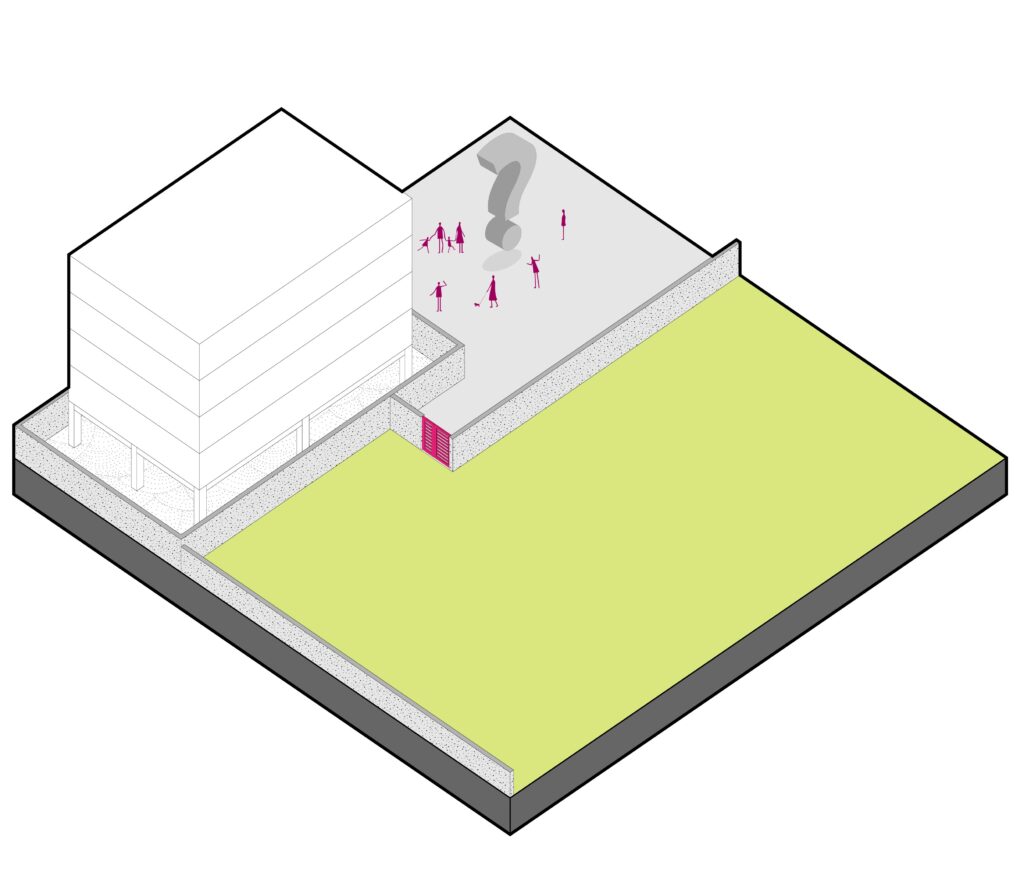
If the owner wishes to make setback for public use they can be given incentive by either allowing the building to jut out above or a decrease in property tax or TDR.
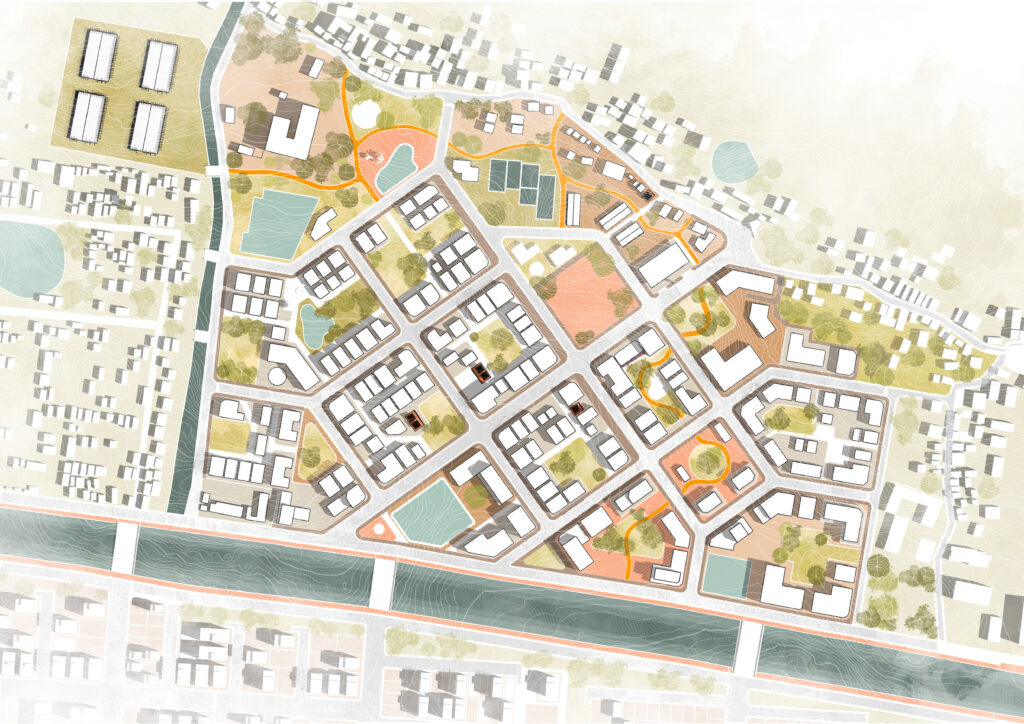
Master Plan
Design that is a transition between urban villages & gated communities
Conclusion
Urban Villages and Gated communities represent a continuum of new Urban Living. It is apparent in the continuous need to make sense of the changed realities through varied place-making strategies. With changing times, the development courses shift towards directions, revealing a contrast in the Urban Realm. Such contrasts lead to exclusion, antagonism and impoverishment, eventually questioning the very sustenance of the city. Through iterative intervening attempts and collaborative practice of place making, exclusive urban spaces could be made fluid, forcing contrasting groups to foster cooperative relationships. Only then would one be able to get an answer to the question, Who’s City? A response might be: It’s not mine or yours; rather, it is for us all.